
Personalized Books for Children Going Through Divorce: Stability in Story Form
When a family restructures, children need anchors — things that are constant and specifically theirs. A personalized book that places them as the hero of their own story isn't therapy, but it offers something close to what children most need: the reassurance that who they are doesn't change.
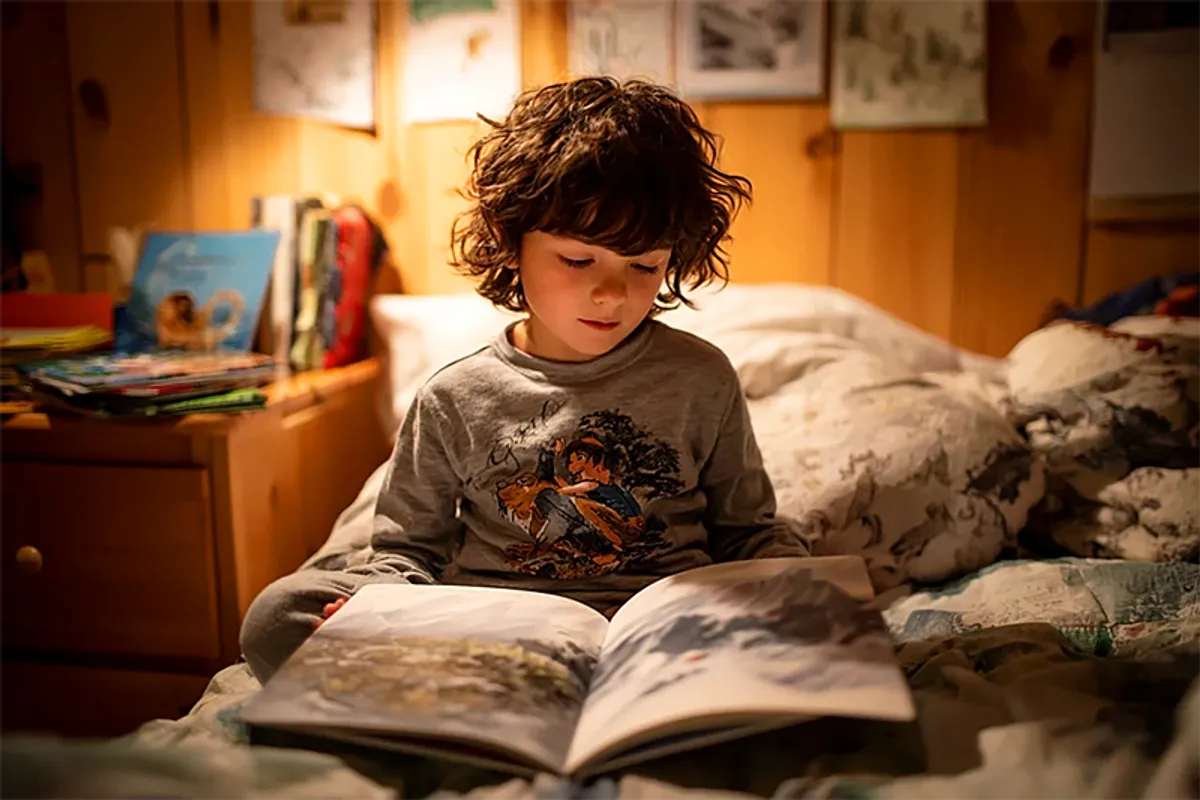
Children don’t need everything explained during a family transition.
They need stability — the experience of some things being constant while others change. They need to feel that they themselves are unchanged, that who they are is not contingent on the structure of the household they come home to. And they often need this communicated in ways that don’t require words, which parents under stress may not always have available.
Books are one of the oldest tools for this kind of stabilizing work. Not because stories solve problems, but because they offer a space where the child is safely held in a narrative — where outcomes can be faced, where emotions can be accompanied, where being the protagonist of a meaningful story is a given rather than something to be earned.
What Research Tells Us About Children and Divorce
The outcomes for children through parental separation range widely, and the research consistently identifies the same protective factors: maintained routines, consistent access to both parents where safe and possible, the absence of conflict exposure, and — importantly — the preservation of the child’s sense of self.
What disrupts children most during divorce is not the structural change itself but the experience of instability: not knowing what is constant, feeling that their world is unpredictable, losing confidence in the parts of themselves that existed before the family changed.
A child whose identity is strong — who has a clear sense of their own qualities, their own story, their own worthiness as a protagonist — tends to navigate family transition with more resilience than a child for whom that identity is fragile or uncertain.
Books that reinforce identity are one tool in maintaining that sense of self.
What a Personalized Book Offers Specifically
For a child going through a family transition, a generic children’s book about divorce can be useful but limited. These books tend to address the situation directly — explaining what divorce means, normalizing the range of feelings, showing characters who navigate similar circumstances. They are valuable and worth reading alongside other support.
A personalized book offers something different, and in some ways more foundational: it does not address the transition at all. It simply celebrates who the child is.
The personalized book says: here is a story about you. You are curious (or brave, or kind, or funny, or determined — whatever is true of this child). You are capable. You are worth a whole adventure. This was made for you because you are specifically, irreducibly yourself.
That message — independent of family structure, independent of what is changing at home — is one of the most stabilizing things a child can receive during a period of instability.
The Book as an Anchor Object
Child psychologists who work with families through divorce often talk about “anchor objects” — things that belong to the child, that travel between households, that are consistently theirs regardless of which parent they are staying with.
A personalized book can function as this kind of anchor. It is specific to the child (not to either parent, not to the old family structure), it can travel with them, and it doesn’t change based on which house it is in. It holds the child’s story in a portable, permanent form.
Some parents going through separation give personalized books to their children precisely for this reason: not as a conversation starter about the family change, but as an object that says, quietly and consistently, you are still you.
For the Gift-Giver: When Words Are Hard
Friends and family of a divorcing couple often struggle with what to give the children. There’s no clean gift occasion — it’s not a birthday, it’s not a holiday, it’s a difficult time. And the usual advice (“be there for them”) doesn’t always translate into a concrete action.
A personalized book is something that can be given without requiring a conversation about the divorce. It’s a gift for the child, about the child, that communicates love and specific attention without drawing the difficulty of the situation into the room. It is: I see you. This was made for you. You are wonderful.
That is a message children need from the adults who love them, especially during times when those adults are stretched thin.
Practical Notes for Parents
For parents creating a personalized book for their own child during a family transition, some things to keep in mind:
The book should be about the child, not the transition. This is not the place to process the family change — it’s an anchor, not a therapeutic tool. Keep the story focused on the child’s strengths and the adventure that awaits them.
The book works best as something owned by the child, not shared between parents. It’s theirs. It travels with them. It’s the same on Tuesday at Mom’s as it is on Friday at Dad’s.
If both parents can be involved in creating it, that’s ideal — but not necessary. The book doesn’t require a united front to be meaningful. It requires care and specificity about who the child is.
Want to create a personalized book for a child going through a family transition? We build it around who they are — their face, their name, the qualities that make them exactly themselves — so the story is entirely about them. Start creating.
Frequently Asked Questions
Are personalized books helpful for children going through divorce? Yes, in a specific way. A personalized book doesn’t address the divorce — it celebrates who the child is, independent of family structure. For children whose sense of self may be unsettled by a family transition, a book that places them as the capable hero of their own story offers a form of identity reinforcement that supports resilience. It’s an anchor object, not a therapy tool, but it serves a real function.
What kind of book should I give a child whose parents are divorcing? There are two categories: books that directly address divorce (which normalize the experience and validate the child’s feelings) and books that simply celebrate the child (which reinforce identity during instability). Both have value. A personalized book falls into the second category — it doesn’t talk about the family change at all; it simply says, here is a story about you, you are wonderful, you are the hero.
Can a personalized book travel between two households? Yes, and this is one of the things that makes it valuable during a family transition. The book belongs to the child, not to either parent or either household. It’s theirs. It goes with them. It’s the same story whether they’re at Mom’s or Dad’s — which is precisely the kind of stability that serves children well during a period when many other things are changing.
When is the right time to give a child a personalized book during a divorce? There’s no wrong time, but the book tends to be most useful early in the transition — when the child is navigating the initial adjustment and most in need of objects that anchor their sense of self. It can also be meaningful as a gift when the child moves between homes for the first time, or at any point when you want to send the message: you are still you, and you are wonderful.
What should a personalized divorce book focus on? Not the divorce — that’s the most important thing to keep in mind. The book should be about the child’s specific qualities, their adventure, their story. The goal is to reinforce identity, not to process the family change. A story about a child whose curiosity saves the day, or whose particular kind of courage takes them through an adventure, says everything that needs to be said without drawing the difficulty into the narrative.

20% off your first book.
One email. One code. No pressure.
We respect your inbox. Unsubscribe anytime.
Read Next
The Christening Gift That Outlasts Everything Else on the Table
Silver frames tarnish. Money goes in a bank account and disappears. But a personalized book given at christening is the beginning of a story — literally. It's there on the shelf twenty years later, a record of who this child was the day they were named.
The Personalized Book for the Child Who's About to Become a Big Sibling
A new baby changes everything — for the baby, yes, but especially for the child who was there first. A book that makes them the hero of this exact transition does something no 'welcome baby' book can.
A Personalized Book for the New Baby: The Birth Gift That Grows With Them
A new baby arrives without a story. A personalized book is the first story anyone has ever told specifically about them — written before they can read it, kept until they can.