
Personalized Books for 4-Year-Olds: The Age When Stories Become Identity
Four is the year children discover they can be the hero of the story — not just a listener, but the protagonist. A personalized book at this age doesn't just entertain. It builds the narrative through which they understand who they are.
Four is not a quiet year developmentally.
At four, children are in the middle of one of the most significant cognitive shifts of early childhood: the emergence of a coherent sense of self. They are building — actively, constantly, with great urgency — an understanding of who they are, what kind of person they are, and how they fit into the world. This isn’t metaphor. It’s neurological. The prefrontal cortex is laying down identity-related structures that will persist into adulthood.
And one of the primary tools four-year-olds use to build that identity is story.
Why Four Is the Sweet Spot
Children’s psychologists describe the years from three to six as a critical window for what they call “narrative identity formation” — the process by which a child begins to understand themselves as a character in an ongoing story rather than as a series of disconnected moments.
Four-year-olds are right in the middle of this window, and they are more cognitively ready to engage with complex personalization than they were at two or three. They understand that the character in a book represents a person. They recognize their own appearance. They can follow a plot that has emotional stakes. They remember a story from one night to the next.
When a personalized book places a four-year-old as the hero of a real story — with actual qualities, actual challenges, actual moments of courage — it does something that a generic book cannot: it gives them a narrative about themselves that they can internalize and return to.
What Four-Year-Olds Need from Books
At four, children are past the stage where simple naming is the whole trick. A book that just drops a child’s name into a stock adventure might delight a two-year-old but will quickly bore a four-year-old who has developed enough critical capacity to notice when something feels generic.
Four-year-olds respond to:
Recognition of their specific qualities. Not “you’re smart” but “you notice things other people miss.” Not “you’re brave” but “you do the hard thing even when it’s scary.” Four-year-olds know the difference between generic praise and accurate observation, and they take accurate observation seriously.
Emotional honesty. Four is the year big feelings arrive in full force. Books that acknowledge fear, jealousy, uncertainty — and show a character (them) navigating those feelings — serve a real developmental need. This is not about making books heavy; it’s about making them true.
A hero who earns it. Four-year-olds have enough narrative sophistication to understand that a hero who faces nothing and wins everything is not really a hero. They want the dragon. They want to be scared and then not-scared. A story that gives the child protagonist a real challenge to work through is more satisfying, and more useful, than one that makes being wonderful effortless.
The Photo Question
The single thing that most transforms a personalized book for a four-year-old is photo-referenced illustration.
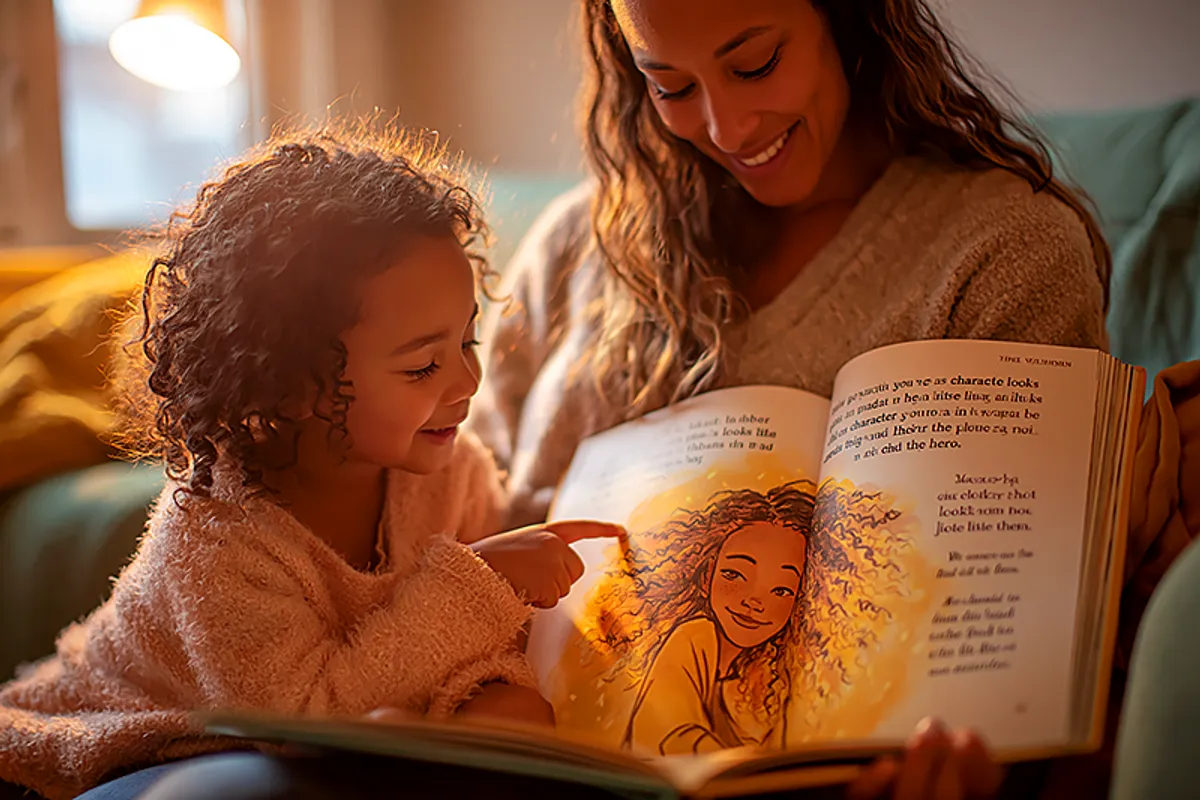
A book that mentions a child’s name will produce a smile. A personalized storybook with the child’s face — their actual features illustrated as the protagonist — produces something closer to awe. Four-year-olds at this developmental stage are in a period of intense interest in their own appearance and their own likeness. Mirrors fascinate them. Photos of themselves fascinate them. The illustrated version of themselves, in a story where they’re the hero, has an emotional impact that is qualitatively different from name insertion alone.
Parents who give photo-referenced personalized books to four-year-olds often describe the same moment: the child goes quiet, then touches the illustration, then looks up. That response is not accidental. It’s the book working.
The Gift That Gets Requested Again
Four-year-olds are the children most likely to request the same book at bedtime repeatedly — not because they’ve forgotten it, but because they want it again. A well-made personalized book taps into this repetition instinct more deeply than most books can, because the thing they want to hear again is the story of who they are.
Across families who have given Libronauts books to four-year-olds, the typical pattern is: first reading produces delight and recognition, second and third readings produce ritual (favorite lines, favorite pages, insistence on reading certain parts with particular emphasis), and by week two the book has become part of the bedtime routine as something they return to rather than something new.
This isn’t just heartwarming. It’s the mechanism by which stories build identity: repetition, internalization, the narrative becoming part of how the child understands themselves.
For Birthdays, Not Just Holidays
Four is a common age for milestone birthday gifts, and the personalized book is particularly well suited because it won’t be outgrown in six months. A book that captures who a child is at four — their specific qualities, their name, their face in illustration — will still be meaningful at seven, at ten, at twenty.
It’s not a toy that gets replaced by the next thing. It’s part of who they were, and who they grew from.
Want to create a personalized book for the four-year-old in your life? We build it around who they actually are — their name, their face, and the specific things that make them exactly themselves. Start creating.
Frequently Asked Questions
Are personalized books suitable for 4-year-olds? Four is one of the best ages for a personalized book. Children this age have enough cognitive and emotional development to engage fully with personalization — they recognize their appearance in illustrations, follow a plot with stakes, and begin forming narrative identity (understanding themselves as characters in an ongoing story). A personalized book at four is developmentally well-timed in a way it can’t quite be at two.
What makes a good personalized book for a 4-year-old? The best personalized books for four-year-olds go beyond name insertion. They capture the child’s specific qualities, show a character who genuinely looks like them, and give the protagonist a real challenge to overcome. Four-year-olds have enough narrative sophistication to notice when a book feels generic; what they respond to is accurate, specific recognition of who they actually are.
Should a personalized book for a 4-year-old use their photo? Photo-referenced illustration makes an especially strong impression on four-year-olds, who are in a period of intense interest in their own appearance. A book where the illustrated protagonist actually looks like them — same features, same expression — produces a different quality of recognition than a book that simply uses their name. If a photo-based option is available, it’s worth it at this age.
How long will a four-year-old stay interested in a personalized book? Far longer than most gifts. Four-year-olds often become attached to books they find meaningful and request them repeatedly at bedtime — not out of forgetting but out of genuine desire to return to the story. A personalized book that captures who a child is at four typically remains part of their reading life for years, not weeks.
What’s a good personalized book for a 4-year-old’s birthday? A photo-based personalized book that centers the child as the hero, captures their specific qualities in the story, and uses professional illustration is the standard to look for. The story should have real stakes — a challenge the character faces and works through — and the illustration should look like the actual child, not a generic protagonist who shares their name.

20% off your first book.
One email. One code. No pressure.
We respect your inbox. Unsubscribe anytime.
Read Next
Why Personalized Books Work Especially Well for Children With ADHD
The research on ADHD and reading engagement points to something specific about how these children respond to stories that are about them.
Before the Words, the Rhythm
Children absorb poetry before they understand it. The rhythm trains the ear, builds memory, and regulates the body. The words come later.
The Book That Knows Their Name
Personalized books sound lovely. But is there science behind it? Three decades of research say the answer changes everything.