
What an Older Child Actually Needs in the First Week
When a new baby arrives, the older child loses something no one names. Here is what the adjustment actually looks like, and the specific kind of attention that helps.
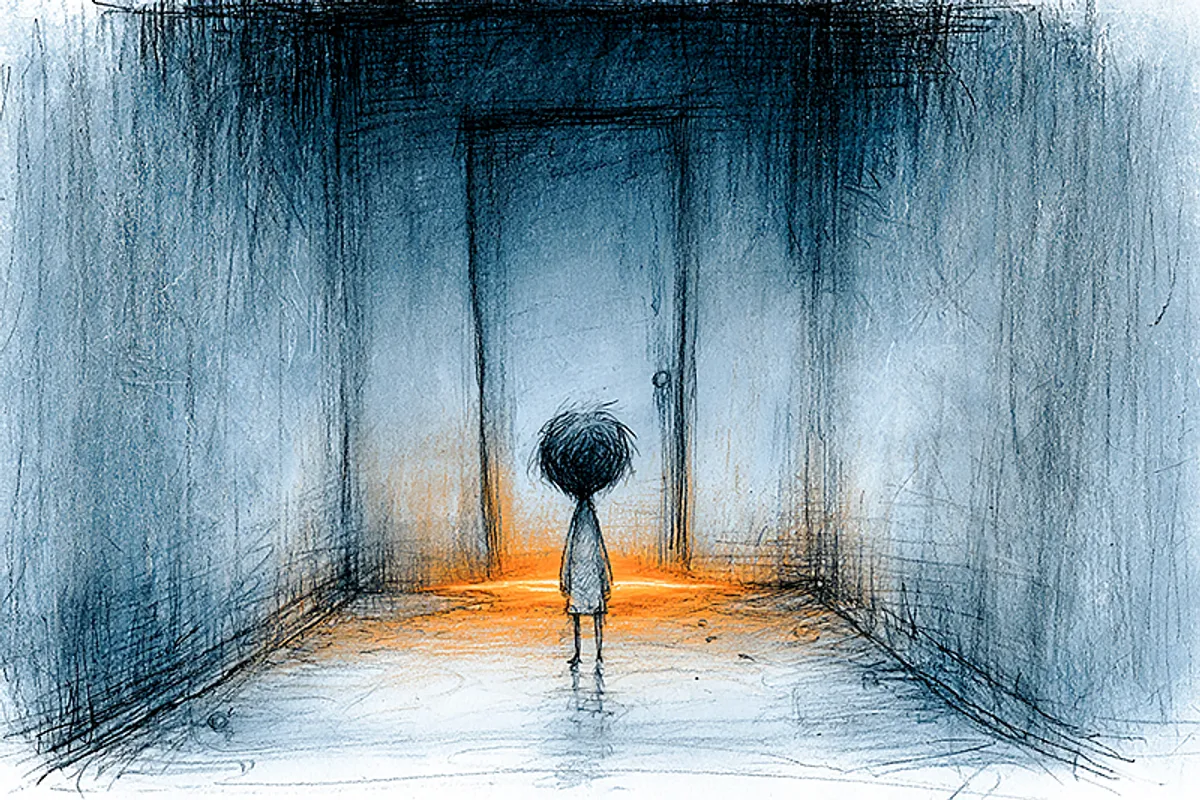
The first few days, they are usually fine.
Better than expected, actually. They hold the baby carefully and explain things to visitors with a kind of transparent authority. They know which drawer the diapers are in, which cry means hunger, which blanket is the right one. They perform the older sibling role with an enthusiasm that looks, from a certain distance, like ease.
Then, around day four or five, the novelty solidifies into reality.
The baby doesn’t go back. The adults are tired in a way that is new and structural, not temporary. The attention that used to flow toward the older child, reliably and completely, has found a new gravitational center. And the older child, who has no language for any of this, begins to reorganize.
What follows gets labeled as regression, jealousy, acting out. Sometimes it is those things. More often it is a child doing what children do with experiences they cannot articulate: expressing them through behavior rather than words.
Understanding this distinction changes what helps.
The Identity Problem No One Names
Here is what the adjustment guides tend to skip over: the older child is not primarily losing a parent’s attention. They are losing a self.
For the child’s entire conscious life, “I” has been synonymous with “the child in this family.” They have been the one the stories are about. The one whose milestones get narrated, whose preferences are tracked, whose small discoveries are announced at dinner. They have been singular.
The baby doesn’t take this away by existing. It takes it away by making the older child suddenly ordinary in a house where they were previously the center of the family’s narrative attention.
Child development frameworks describe this as disruption to a child’s working model of self: the implicit internal map they carry of who they are, where they belong, and what their role is in the family system. When that map is abruptly wrong, the child experiences something that functions like grief, even if nothing has been lost in the literal sense. Their previous self has been retired without ceremony.
That is not a small adjustment.
What We Know About What Works
Research on sibling transitions consistently finds that the quality of the older child’s adjustment correlates less with the baby’s temperament than with how the older child is positioned in the family’s story.
Children who are actively included in the narrative of the baby’s arrival, not as helpers or as secondary characters but as protagonists with their own specific significance, tend to fare better in the transition than children who receive compensatory attention without that narrative placement.
The distinction is worth holding: compensatory attention says, you still matter even though the baby is here. Narrative inclusion says, you are part of this story in a way that only you can be.
Children can feel the difference before they can name it.
What Witnessed Time Actually Means
What the older child needs in the first week is not simply more time. Parents are managing on less sleep with more demands, and the guilt that accumulates from not having more to give is its own problem. Time is not always expandable.
What the older child needs is witnessed time. Moments where an adult is present specifically for them: not multitasking, not adjacent to the baby’s feeding schedule, not half-elsewhere. Even brief.
What we understand about parental attunement suggests that quality of presence matters more than duration. A ten-minute walk, undivided, is experienced differently than an hour of proximity where the parent is visibly somewhere else. The child knows when they have the whole person. They know when they have the remainder.
The other element that helps, and this is the part most guides underestimate, is specificity. Not generic reassurance, which a child correctly processes as a category response aimed at the role rather than at them. But precise, particular recognition. The kind of language that could not have been said to anyone else. You are the one who made the baby laugh for the first time. You are the one who knows how to find things in this house when no one else can. Your specific knowledge, your specific presence, belongs here.
This is, at its core, what children require to form an identity that can survive disruption: the repeated experience of being seen as a specific person, not a category of person. Not “the older sibling.” Them.
Something to Give an Older Child When the Baby Comes Home
One of the simplest things you can offer in that first week is something that makes the older child unambiguously the center of their own story.
Not a distraction. Not a consolation prize. Something that says: you were the protagonist before this, and you still are. The chapter just changed.
A book crafted around who they already are works precisely because it cannot be redirected. It cannot be shared. It belongs to the older child, specifically, in a house where everything is suddenly being shared. At the moment when their sense of self is most uncertain, that particular belonging is what they are looking for.
The adjustment takes longer than a week. But the first week sets a tone. And the tone that helps most is not reassurance.
It is recognition.

20% off your first book.
One email. One code. No pressure.
We respect your inbox. Unsubscribe anytime.
Read Next
The Personalized Book for the Child Who's About to Become a Big Sibling
A new baby changes everything — for the baby, yes, but especially for the child who was there first. A book that makes them the hero of this exact transition does something no 'welcome baby' book can.
The Grandmother's Mother's Day Gift That Bridges Generations
This Mother's Day, give the grandmother in your life a gift that celebrates her role as the matriarch of family stories. A personalized book where her grandchild is the hero becomes the bridge between generations she never knew she needed.
A Personalized Book for an Adopted Child
Every child's story is worth telling. Some stories just begin in a more remarkable place.