
The Mother's Day Gift for a Year of Childhood That Won't Come Back
She doesn't know which night is the last time she'll be called at 3am. Which morning is the last time he'll want to hold her hand crossing the street. A personalized book captures the child as they are right now — before this version of them quietly becomes last year.
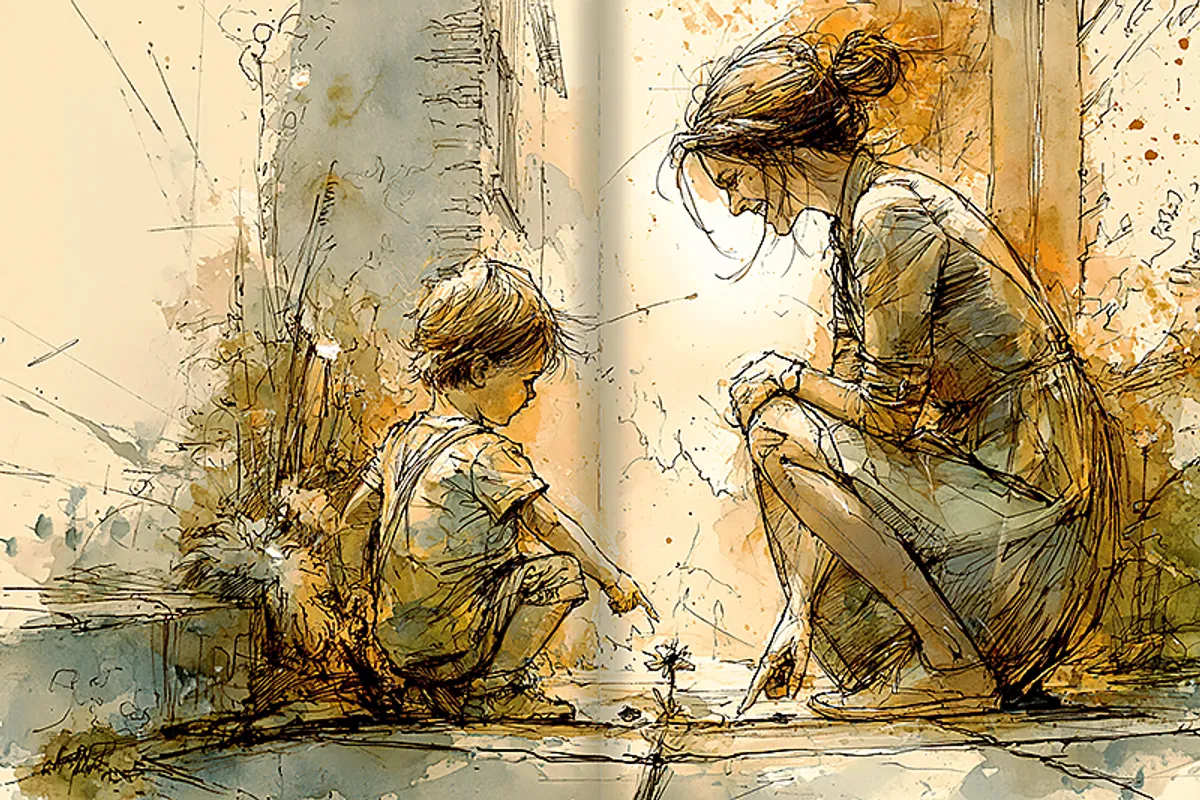
Nobody tells you which one is the last time.
Not the last time she asks you to carry her up the stairs because her legs are “too tired.” Not the last morning he climbs into your bed at 6am and fits himself under your arm like he was made for exactly that space. Not the last time she reaches for your hand automatically when you step off the curb.
These things don’t announce themselves. One day they just stop happening, and you only notice later — in a quiet moment, unprompted, usually months after the fact. Oh. She stopped asking me to stay until she fell asleep. When was the last time? I don’t remember. It just…stopped.
This is the peculiar grief of childhood: it moves in one direction, without ceremony, and the losses are invisible until they’re complete.
What Mother’s Day Is Actually About
Strip away the brunch reservations and the flower delivery logistics, and Mother’s Day is about one thing: the relationship between a mother and the specific child who made her one.
Not the abstract concept of motherhood. Not her role in the household or her contributions over the years. The particular child — this one, at this age, right now — and the daily experience of knowing them.
That’s what makes most Mother’s Day gifts miss. They celebrate the occasion without acknowledging what the occasion is actually about. A candle doesn’t know her child. A spa voucher has no idea that her four-year-old currently pronounces “spaghetti” as psgetti and that this is the funniest thing she’s ever heard, every single time. The jewelry is beautiful and impersonal in the way that beautiful impersonal things are.
The gift she’ll keep is the one that proves someone was paying attention. Not to her in the abstract. To her child. Right now. Before right now becomes that was years ago.
The Year That’s Already Passing
Here is what’s true of any Mother’s Day: the child who will receive a personalized gift this year will not be the same child next year. Not in some vague developmental sense. Specifically. The way they talk. The things they’re afraid of. The way they greet you when you come home. The size of their hands.
A child at four is in a year that has never existed before and will never exist again. Same at six. Same at eight. Each year has its own texture — its own specific fears and obsessions and ways of understanding the world — and each one is finite. You are always, as a parent, in the last year of something without knowing it.
This is the insight that turns a personalized book into something different from other personalized Mother’s Day gifts in 2026.
It isn’t a keepsake in the generic sense — a thing you put in a box and find in a move. It’s a document. A record of who this child was in this specific year, made with enough particularity that the document will be legible decades from now. The name. The face, rendered by an illustrator who worked from photographs. The quality of their curiosity. The story built around who they are, not who they’ll become.
What a Document Does That a Gift Cannot
There is a difference between commemorating and documenting.
Commemorating says: this happened, it was meaningful. A birthday party commemorates. An anniversary dinner commemorates.
Documenting says: this is what it was like. The photograph that caught the exact expression. The handwritten note with the specific words. The book built around the specific child in the specific year in which it was made.
The personalized books at Libronauts are designed to document. Not with statistics or milestone markers, but with the visual and narrative specificity that makes a child recognizable. Their face, translated into illustration. A story shaped around their particular way of being in the world. Something that could not have been made for any other child, in any other year.
When a mother opens it on Mother’s Day, what she receives is not just a book. It’s evidence that this version of her child — the specific, unrepeatable, slightly-mispronouncing-psgetti version — was seen clearly and captured before it changed.
The Irreversible Direction
There’s a temptation to make this sad. The fleeting nature of childhood, the invisible last times, the grief that lives inside love. This is real.
But there is another way to look at it: the fact that childhood moves in one direction is precisely why a document of it has value that other gifts don’t. A piece of jewelry doesn’t become more precious because your child turned five. A spa voucher doesn’t carry more weight because this is the last year she’ll believe in the tooth fairy.
A personalized book does. The specificity that makes it valuable on the morning it’s unwrapped — the recognition, the proof of attention — becomes more valuable with every year that passes. Because the child it captured will not be five again. The book becomes the record of a year that, from the outside, looked ordinary while it was happening.
Most ordinary years do, until they’re over.
For the Right Occasion
A personalized book is not the right gift in every situation. But for a mother of a child between two and eight, at a holiday that is fundamentally about the relationship she has with that specific child, it is close to the ideal form.
Not because it’s sentimental. Because it’s precise.
It gives her something that will still be on her shelf when her child is twenty, and when she takes it down, she will know exactly what four felt like. She will remember the specific quality of that year. She will not remember the candle.
See what a personalized book looks like and how it’s made →
Pricing and ordering for Mother’s Day →
Mother’s Day is May 10. For personalized books with photo-referenced illustration, allow three weeks for production and shipping. Order by late April for comfortable delivery. Check current lead times →
Frequently Asked Questions
What makes a personalized Mother’s Day gift different from a regular gift? The gifts that stay with people are specific. A personalized Mother’s Day gift built around her actual child — featuring their name, their face in illustrated form, a story shaped around who they are — is specific in a way that has nothing to do with price. It’s specific in the way a document is specific: it refers to a particular person at a particular moment in time. That’s the quality that makes it irreplaceable rather than replaceable.
What are the best personalized Mother’s Day gifts in 2026? Among personalized Mother’s Day gifts in 2026, the ones that receive the most lasting response are the ones that capture something true about her child right now — not a generic version of childhood, but this child, this year. A personalized book built from photos and story customization sits clearly in that category. The trend toward “emotional utility” in gifting means recipients increasingly prefer things that serve a function in their emotional life over things that simply signal effort. A book that documents a child’s current age does both.
When should I order a personalized book for Mother’s Day? Allow at least three weeks for production and shipping. Mother’s Day in the US is May 10, 2026. Ordering by mid-to-late April gives comfortable margin. Check current availability and lead times — expedited options may be available closer to the date.
Is a personalized book appropriate for any age child? Personalized books are particularly well-suited for children between ages 2 and 8. This is the window when photo-referenced illustration lands with the most impact — the child recognizes themselves — and also the period of childhood that changes most rapidly. A book made when a child is four will feel like a different era when they are seven. That gap is what gives the document its value.
Can the child be involved in making the gift? Yes, depending on age. A child of five or older can describe themselves, name a favorite thing, choose the type of adventure they’d want to have. Younger children contribute through photographs, which become the basis for illustration. The result is a gift that is genuinely from the child as much as it is for the mother — which is appropriate for a holiday that is really about the two of them.

20% off your first book.
One email. One code. No pressure.
We respect your inbox. Unsubscribe anytime.
Read Next
The Mother's Day Gift She Didn't Know She Wanted
She'll say she doesn't need anything. What she actually wants is evidence — that someone was paying attention to her child, to the texture of their days together, to the specific small person only she really knows. A personalized book is that evidence, and the one Mother's Day gift that stays.
Why a Personalized Book Is the Mother's Day Gift That Doesn't End Up in a Drawer
Most personalized Mother's Day gifts are items that work well for a week and then disappear. Here's why a personalized book is the exception — and what makes it the rare gift that she'll still have, and still care about, a decade from now.

What a Birthday Actually Marks
It's not just a party. It's a time stamp. And the best birthday gifts know the difference.