
The Mother's Day Gift She Didn't Know She Wanted
She'll say she doesn't need anything. What she actually wants is evidence — that someone was paying attention to her child, to the texture of their days together, to the specific small person only she really knows. A personalized book is that evidence, and the one Mother's Day gift that stays.
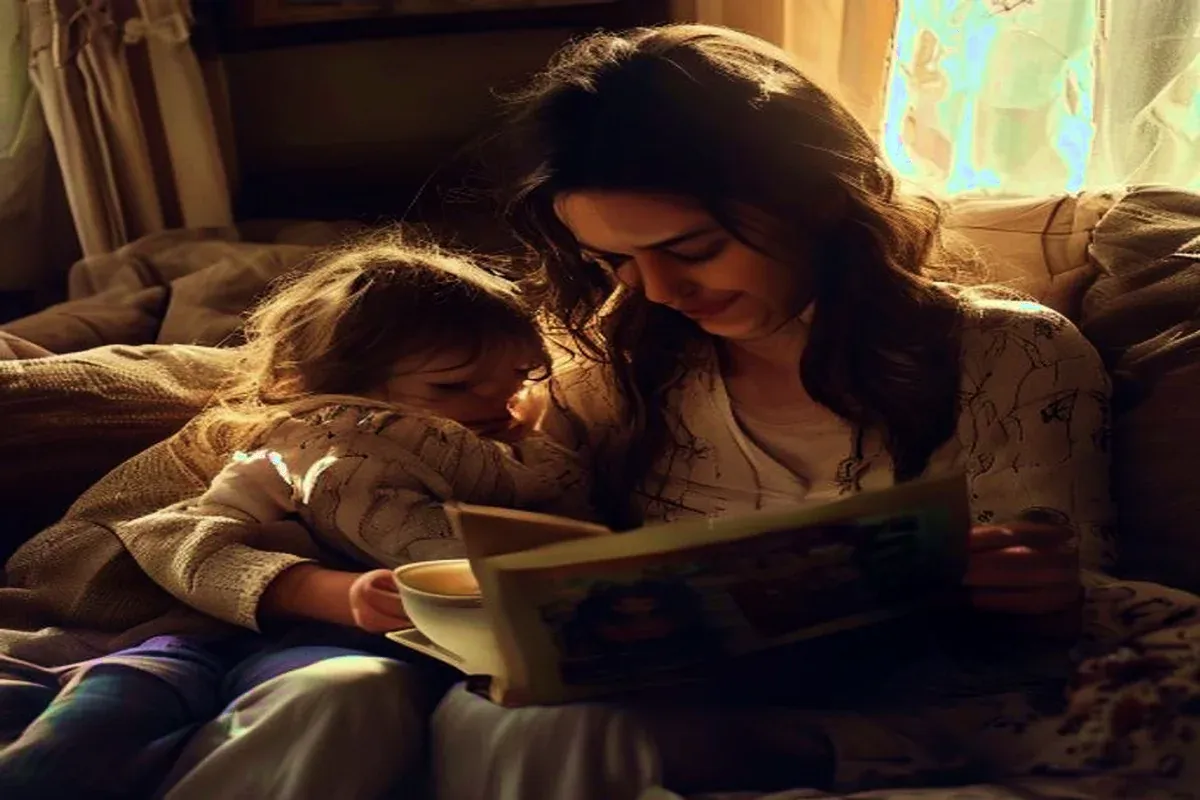
Nobody tells you which one is the last time.
Not the last time she asks you to carry her up the stairs because her legs are “too tired.” Not the last morning he climbs into your bed at 6am and fits himself under your arm like he was made for exactly that space. Not the last time she reaches for your hand automatically when you step off the curb.
These things don’t announce themselves. One day they just stop happening, and you only notice later — in a quiet moment, unprompted, usually months after the fact. Oh. She stopped asking me to stay until she fell asleep. When was the last time? I don’t remember. It just…stopped.
This is the peculiar grief of childhood: it moves in one direction, without ceremony, and the losses are invisible until they’re complete.
Mother’s Day gifts occupy a peculiar emotional territory in that context. There is the category that is obviously right: flowers, a handwritten card, breakfast made by small hands that spill things. These work because they’re expressive rather than functional — they communicate effort and attention. Then there is the category that tries to be more substantial and mostly fails: the spa gift card she won’t use, the jewelry that’s nice but impersonal, the experience gift that requires scheduling and childcare and ends up producing more logistics than joy.
What mothers actually want — most mothers, most of the time — is evidence. Evidence that someone was watching. Evidence that the particular child who fills her days and occupies her thoughts is being seen by someone other than her. Evidence that the small specific things she knows about this child — the funny phrases, the obsessions, the way they approach the world — have been noticed and deemed worth celebrating.
A personalized book is that evidence made physical.
What the Data Keeps Saying
Every year, the surveys tell the same story. A 2025 YouGov survey found that 61% of American mothers want to spend Mother’s Day with their children — not at a spa, not at brunch, but with them. A Mixbook study found that 54% of moms rank personalized photo gifts among the most meaningful they can receive. And 97% said they would choose a gift that brings their family closer together over a traditional one.
The pattern is consistent. Moms want connection, not consumption. Closeness, not convenience.
The trouble is that closeness is hard to wrap.
The Ritual Nobody Photographs
There is a moment in most houses that happens so quietly nobody names it.
It comes after the bath. After the last glass of water. After the negotiations about which pajamas, which stuffed animal, which pillow arrangement is acceptable tonight. The lights go low. The house finally settles. And a book comes off the shelf.
This is the part of motherhood that rarely gets photographed. There’s no milestone marker for it. No one throws a party for the 400th time she reads the same story about a bear who can’t find his hat. But if you asked her, years from now, which moments she misses most, this would be near the top.
Research backs up what she already feels. The American Academy of Pediatrics calls shared reading a practice that builds both brains and bonds, strengthening attachment at a neurobiological level. And the neuroscience explains why — what happens inside a child’s brain during shared reading is more profound than most parents realize.
But here is the part the clinical language misses: it isn’t just good for the child.
A 2021 study published in Frontiers in Psychology found that adults who read storybooks aloud with a child experienced significantly more positive emotions than those who read the same books alone. The more interactive the reading, the greater the effect. Separate research from the University of Sussex found that reading for just six minutes reduces stress by 68%, lowering cortisol, heart rate, and muscle tension more effectively than music, tea, or a walk.
So when a mother reads to her child at the end of a long day, something reciprocal happens. She is giving them language and safety and closeness. And they are giving her calm.
What a Personalized Book Actually Says
There is a moment that happens when a parent opens a well-made personalized book about their child for the first time. It is not primarily a moment of reading. It is a moment of recognition — the particular quality of encountering something that reflects back something you know.
The feeling is specific to parents. They are the people who know these details. They are the ones who notice that this child approaches problems in a particular way, who has a specific kind of courage, who narrates their own experience out loud in a voice that is entirely their own. The people who have paid attention for years to something irreplaceable.
When they see those details in a book — when they recognize their child in the character, when the story reflects something genuinely true about who this small person is — they feel seen too. Not directly. But through the thing they know best.
This is why a personalized book is not primarily a gift for the child, even though the child is in it. The child’s relationship with the book is simple and direct: they are in it, they love it. The parent’s relationship is more complex: it’s the experience of someone understanding what they’ve been doing all along.
The Year That’s Already Passing
Here is what’s true of any Mother’s Day: the child who will receive a personalized gift this year will not be the same child next year. Not in some vague developmental sense. Specifically. The way they talk. The things they’re afraid of. The way they greet you when you come home. The size of their hands.
A child at four is in a year that has never existed before and will never exist again. Same at six. Same at eight. Each year has its own texture — its own specific fears and obsessions and ways of understanding the world — and each one is finite. You are always, as a parent, in the last year of something without knowing it.
This is the insight that turns a personalized book into something different from other personalized Mother’s Day gifts.
It isn’t a keepsake in the generic sense — a thing you put in a box and find in a move. It’s a document. A record of who this child was in this specific year, made with enough particularity that the document will be legible decades from now. The name. The face, rendered by an illustrator who worked from photographs. The quality of their curiosity. The story built around who they are, not who they’ll become.
There is a difference between commemorating and documenting. Commemorating says: this happened, it was meaningful. Documenting says: this is what it was like. The personalized books at Libronauts are designed to document — with the visual and narrative specificity that makes a child recognizable. Their face, translated into illustration. A story shaped around their particular way of being in the world. Something that could not have been made for any other child, in any other year.
What Actually Gets Kept
Think about the objects that move through a lifetime — the ones that follow a person from house to house, that survive multiple rounds of decluttering, that are never sold at the yard sale. They share a quality that has nothing to do with how much they cost or how elegant they are.
They are specific.
They are specific to a particular person, a particular relationship, a particular moment that couldn’t have been documented in any other way. They are the birthday card that contained a sentence no one expected. The photograph from a holiday that captured the exact expression. The handmade object that required someone to have paid close attention.
The spa gift card does not have this quality. Neither does the cashmere sweater, however nice. They are given with generosity and received with warmth, and then they are absorbed into the general inventory of adult life.
A personalized book — built around the specific child who is at the center of this mother’s world — has the quality that survives. Not because it’s sentimental in a generic way. Because it is evidential. It is proof that someone looked closely at her child, understood something true about who they are, and captured it in a form that can be returned to.
Most Mother’s Day gifts have a brief half-life. Flowers last a week. Chocolates last a day. A personalized book is different. It stays. It finds a place on the shelf that isn’t quite the children’s shelf (too precious) and isn’t quite the family bookshelf (too small, too illustrated) — it occupies its own category. It gets brought out for rereading. The mother who receives it for Mother’s Day will still have it when her child is thirty. She will probably know exactly where it is.
A Mother’s Day gift that she keeps until her grandchildren ask about it: that is a different category of gift entirely.
The Practical Question
A personalized book is not the right gift in every situation. It’s particularly well-suited for:
- Mothers with children between ages 2 and 8 (the range where photo-based illustration lands with the most impact)
- First-time mothers (the first Mother’s Day with a newborn has its own weight)
- Grandmothers who are deeply involved with a grandchild
- Long-distance family members who want the gift to carry meaning that presence can’t
For the right situation, there’s nothing else quite like it.
Timing: Mother’s Day is May 10. For personalized books with photo-referenced illustration, allow at least three weeks for production and shipping. Ordering by late April gives comfortable margin. Check current lead times →
Give her the evidence. She’s earned it.
Create a personalized book for Mother’s Day →
Frequently Asked Questions
What makes a personalized Mother’s Day gift different from a regular gift? The gifts that stay with people are specific. A personalized Mother’s Day gift built around her actual child — featuring their name, their face in illustrated form, a story shaped around who they are — is specific in a way that has nothing to do with price. It’s specific in the way a document is specific: it refers to a particular person at a particular moment in time. That’s the quality that makes it irreplaceable rather than replaceable.
What are the best personalized Mother’s Day gifts in 2026? Among personalized Mother’s Day gifts in 2026, the ones that receive the most lasting response are the ones that capture something true about her child right now — not a generic version of childhood, but this child, this year. A personalized book built from photos and story customization sits clearly in that category. The trend toward “emotional utility” in gifting means recipients increasingly prefer things that serve a function in their emotional life over things that simply signal effort. A book that documents a child’s current age does both.
When should I order a personalized book for Mother’s Day? Allow at least three weeks for production and shipping. Mother’s Day in the US is May 10, 2026. Ordering by mid-to-late April gives comfortable margin. Check current availability and lead times — expedited options may be available closer to the date.
Is a personalized book appropriate for any age child? Personalized books are particularly well-suited for children between ages 2 and 8. This is the window when photo-referenced illustration lands with the most impact — the child recognizes themselves — and also the period of childhood that changes most rapidly. A book made when a child is four will feel like a different era when they are seven. That gap is what gives the document its value.
Can the child be involved in making the gift? Yes, depending on age. A child of five or older can describe themselves, name a favorite thing, choose the type of adventure they’d want to have. Younger children contribute through photographs, which become the basis for illustration. The result is a gift that is genuinely from the child as much as it is for the mother — which is appropriate for a holiday that is really about the two of them.
What makes a personalized Mother’s Day gift actually last? Specificity. The gifts that survive drawer-clearing and downsizing are the ones that are specific to this mother and her specific child — not the ones that are personalized in name only (a mug with her name, a towel with a monogram). A book built around her child’s actual appearance, name, and personality is specific in a way that makes it difficult to discard: it’s not a decoration, it’s a document.
Is a personalized book a good gift from a child to a mother? It works in both directions. Technically, the child is the subject of the book, not the author — the coordination requires adult involvement. But the child can participate meaningfully: an older child (5+) can describe themselves, share their favorite things, help choose the story. Younger children can contribute a photo, which becomes the basis for the illustration. The result is a gift that is ostensibly from the child to the mother, and in some genuine sense, that’s accurate.

20% off your first book.
One email. One code. No pressure.
We respect your inbox. Unsubscribe anytime.
Read Next
The Mother's Day Gift for a Year of Childhood That Won't Come Back
She doesn't know which night is the last time she'll be called at 3am. Which morning is the last time he'll want to hold her hand crossing the street. A personalized book captures the child as they are right now — before this version of them quietly becomes last year.
Why a Personalized Book Is the Mother's Day Gift That Doesn't End Up in a Drawer
Most personalized Mother's Day gifts are items that work well for a week and then disappear. Here's why a personalized book is the exception — and what makes it the rare gift that she'll still have, and still care about, a decade from now.
End of School Year Gift: The One That Marks What Actually Happened
A certificate fades. A trophy sits on a shelf until it's forgotten. But a book that captures who your child became this school year — that's the kind of end-of-year marker they'll still understand at thirty.