
What to Write in a Personalized Book: The Inscription That Makes It a Keepsake
The book is made. The illustration is done. What you write on the inside cover is the final layer — the human part that no AI can do for you. Here's how to write an inscription that the child will read at thirty and still feel.
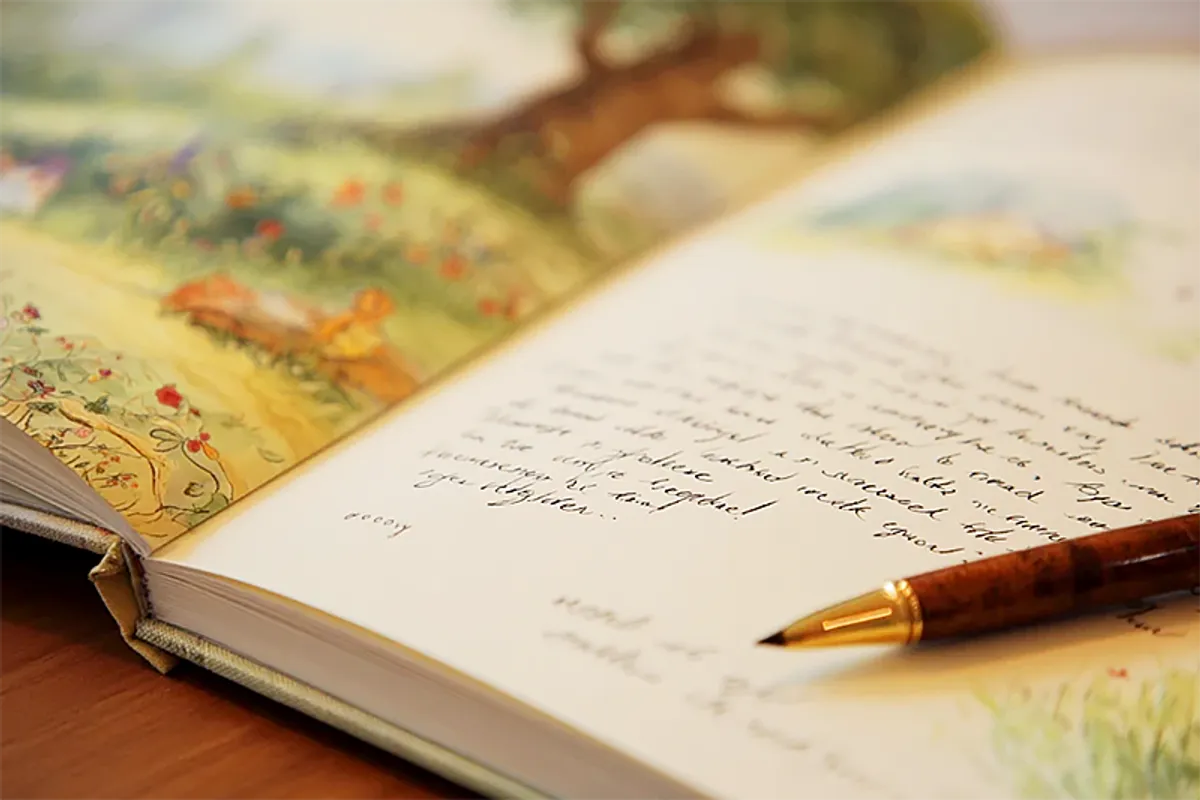
A personalized book arrives complete: the story written, the character illustrated, the child’s name woven through every page.
But there is still something left to do — something that no service can do for you, no matter how sophisticated.
The inscription.
The inside cover of a book is a specific kind of real estate. It is where the gift becomes explicitly relational — where the person who gave the book speaks directly to the person who received it, in their own words, in their own hand. A personalized book without an inscription is complete. A personalized book with the right inscription is something that will be read in thirty years with a feeling that’s harder to name than sentimentality.
Here is how to write one that holds up.
The Principles
Write to the child as they will be, not just as they are. The child who opens this book is small. The adult who reads the inscription years later is not. A good inscription speaks to both. “For Eliza, on her third birthday, with all our love” is sweet. “For Eliza, who will one day read this and hopefully remember that we saw it coming” is the one she keeps.
Be specific rather than general. “You are so special” is what every card says. “You are the child who narrates everything you do out loud and we hope you never stop” is what gets read aloud at a future family dinner. Specificity is what makes an inscription feel written for this child rather than for any child.
Write for the future as well as the present. Consider what it will mean for this child to read these words in a decade, or two. The inscription that aged best is usually the one that expressed something true about the child’s character — something that turned out to be accurate — rather than something purely about the moment.
Don’t over-explain. An inscription is not an essay. Two or three sentences of genuine feeling land harder than a paragraph of well-intentioned elaboration.
Formats That Work
The observation: What is true about this child right now that you want recorded?
“You are four years old and you approach every new thing like it’s already yours. That quality is going to take you places. — With love, Grandma, Christmas 2026.”
The aspiration: What do you hope for them?
“May you always know how extraordinary you are — and never quite believe it enough to stop trying. With all my love, Mom.”
The dedication: Simple, warm, and permanent.
“For Theo. This story was made for you, because you are worth one. Love always, Dad.”
The inside joke: For a child old enough to have a shared sense of humour with the giver.
“For Maya, who asked for a dog eleven times this year. The dog is still no. The book is yes. Happy birthday — Auntie Sarah.”
The date anchor: Sometimes the most powerful inscriptions are the ones that locate the moment in time.
“Given to Finn on the day of his christening, May 3rd 2026. You had no idea what was happening, but everyone else did. We love you already more than we can say.”
For christening or baptism occasions specifically, see our christening book and baptism book pages for books made with this milestone in mind.
What to Include
Always include: The date, the occasion, and who it’s from. These are the bare minimum — without them, the inscription loses its archival function. A book with an undated inscription could be from any year; a dated one is a time capsule.
Consider including: The child’s age, a specific detail about who they are right now, a reason this particular book was chosen for them.
Avoid: Generic sentiments that could go in any card (“you are so wonderful and special”), elaborate explanations of the book itself, anything that will be embarrassing to read in public twenty years later.
The Handwriting Question
Write it by hand if at all possible.
Handwriting is personal in a way that printing isn’t. It carries evidence of the person who wrote it — their particular formation of letters, the way their pen moves. In an era of typed communication, handwriting has become rare enough that its presence in a book is itself a gesture.
If your handwriting is poor, that is not a reason to type. Poor handwriting that is clearly yours is more personal than perfect printing that could be from anyone.
The Final Advice
Write it the day the book arrives, while the feeling of giving is still fresh. An inscription written two days before a birthday party, with the noise of the occasion already in the room, will be good. An inscription written in the quiet of the week before, while you’re thinking about this specific child and what you want to say to them, will be the one they read at thirty.
Take ten minutes. Sit with the book. Write something true.
The story inside was made for them. The words on the inside cover are from you.
Make them count.
Frequently Asked Questions
What should I write in a children’s book gift? Write something specific to this child and this moment. Not a generic “Happy Birthday” but a line that names who they are right now: what they love, what makes them laugh, what you want them to know. Date it. In ten years, the specificity is what makes it priceless.
What do you write in a personalized book dedication? Speak directly to the child, even if they cannot read yet. Tell them something true about themselves or about your relationship. Include the date and the occasion. Keep it honest and brief. The best inscriptions are the ones that sound like your actual voice.
Does it matter whether I write it before or after giving the book? Write it before. The inscription written in the quiet before the occasion — when you’re thinking about the child specifically, without the noise of a party — is almost always more personal than one written in the moment. Ten minutes alone with the book produces better words than the best intentions at the last minute.

20% off your first book.
One email. One code. No pressure.
We respect your inbox. Unsubscribe anytime.
Read Next
The Christening Gift That Outlasts Everything Else on the Table
Silver frames tarnish. Money goes in a bank account and disappears. But a personalized book given at christening is the beginning of a story — literally. It's there on the shelf twenty years later, a record of who this child was the day they were named.
Kindergarten Graduation Gift: What to Give for the Year That Actually Changed Them
Kindergarten isn't just a school year. It's the year children discover who they are outside of home. The gift that marks it should acknowledge what actually happened — not just that they finished.
End of School Year Gift: The One That Marks What Actually Happened
A certificate fades. A trophy sits on a shelf until it's forgotten. But a book that captures who your child became this school year — that's the kind of end-of-year marker they'll still understand at thirty.