
The Gift From an Auntie (That Makes You Her Favorite)
You're not the parent. You don't buy the practical things. That's the whole point.
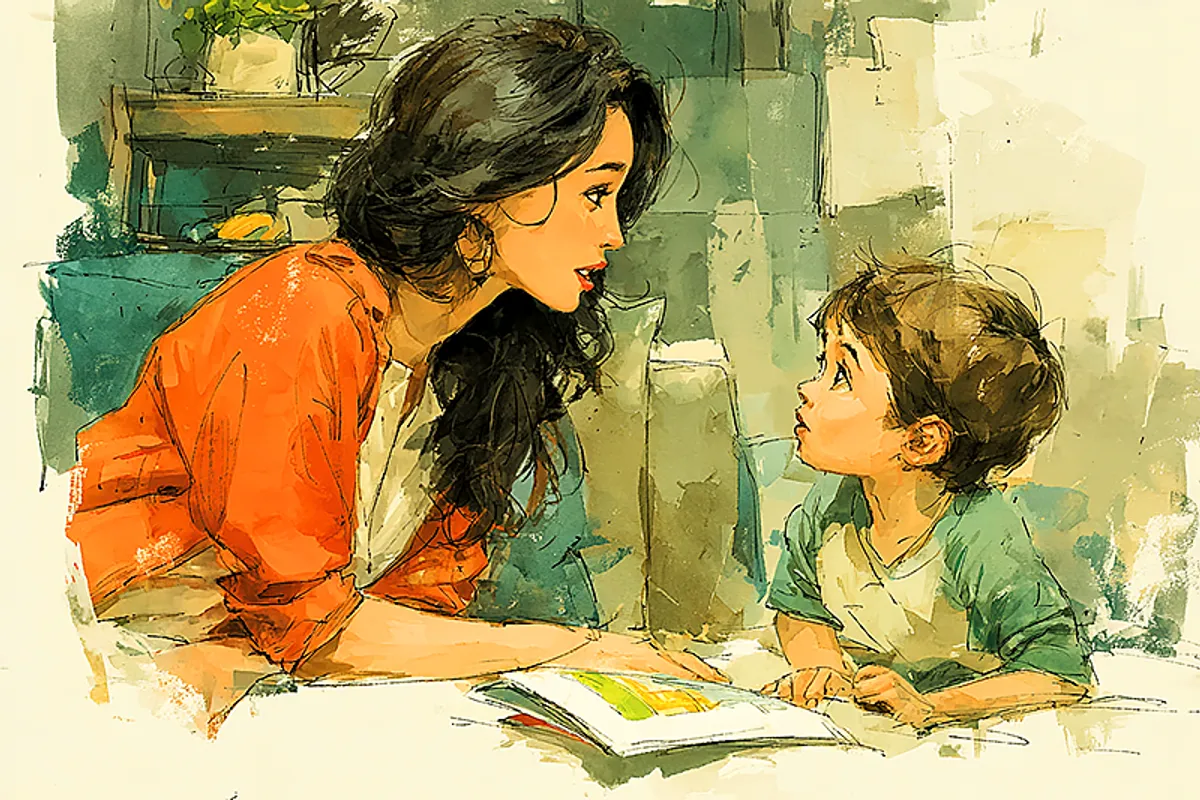
There is a particular freedom that comes with being an aunt or uncle.
You are not responsible for the vegetables or the bedtime or the screen time limits. You are not managing the dentist appointments or the school pickup routine or the ongoing negotiation about whether the family needs another pet. You exist, in the child’s ecosystem, as something rare: a grown-up who is purely on their side.
The gift you give should reflect that.
The Auntie Gift Problem
The challenge is not budget. It is meaning. Aunties and uncles are capable of buying any number of things — and usually do, with genuine enthusiasm. The toys accumulate. The clothes are quickly outgrown. The novelty fades.
What stays is harder to manufacture. It is the thing that tells the child: I see you specifically. Not children in general. Not your age demographic. You, with your particular laugh and your specific obsessions and the funny thing you said last Christmas that I still think about.
This is what personalized gifts are trying to reach. Most of them get partway there. A name on a mug reaches the “I know who you are” register but not the “I understand who you are” register. A book that tells a story about this specific child — written for them, illustrated with their face — gets to something deeper.
Why the Auntie-Niece (or Nephew) Bond Is a Gift Category of Its Own
Developmental psychologists have written about the role of extended family in children’s identity formation. Parents are too close and too necessary to provide the distance that certain kinds of recognition require. A parent’s love is total and constant. An auntie’s love is specific and chosen: she is there because she wants to be, not because she has to be.
Children feel this difference. Research on attachment theory suggests that children form distinct emotional categories for different caregivers, and that the relationships outside the nuclear family often carry a particular kind of emotional permission — the freedom to be a slightly different version of yourself.
A gift that recognizes this relationship is not just a personalized book. It is evidence of a bond that has its own weight.
What Makes a Niece or Nephew Gift Memorable
The rule for auntie gifts is not different from the rule for any good gift. It has to be specific enough that the child understands it was made for them, not purchased for their category.
What is too generic:
- “For a child who loves adventure” (that’s most children)
- “With your name in the story” (a name is not a character)
- “Personalized with your photo” (if the character could be any child who uploaded a photo, the personalization is cosmetic)
What lands: The book that reflects this child at this age, with this personality, in a story that could not have been written for any other child in quite the same way. When the child looks at the character and understands, without being told, that it is them — that is the moment.
An AI-personalized book builds from the specifics a parent provides: the child’s name, age, personality, the things they love, and a photo. What comes back is not a template with a name inserted. It is a story generated around those particulars, with illustrations rendered from the child’s face — a personalized storybook with the child’s face as the hero on every page.
The child recognizes themselves. And they recognize that someone paid enough attention to make something for exactly who they are.
A Note on Auntie as Buyer
The gift-giving logic here is different from a parent buying for their own child. Parents are constrained by practicality and ongoing presence. They know what the child already has; they are thinking about next month and the shelf space and whether another item will survive the household.
An auntie arrives from outside that calculus. She is thinking about the child as a whole person — what would make this particular child feel seen and delighted, without the weight of practical management.
This is why aunties give better gifts. Not more expensive ones. More considered ones.
A personalized book fits this perfectly: it requires paying attention, not spending more. The information needed to make it extraordinary is already in the auntie’s head. She knows the child’s name, their age, the phase they’re in, what they’re obsessed with this year, what they looked like in the last photo she saved.
That knowledge, applied, becomes a book the child will keep.
Practical Notes
Libronauts takes 10–15 minutes to create. You provide the child’s details and, optionally, a photo. The AI writes an original story for this specific child; the illustrations are generated from the photo so the character looks like them.
Price range: $69–$129. Ships globally via Gelato. It arrives looking like what it is: a book made for exactly this child, from someone who knows them.
That is the auntie gift.

20% off your first book.
One email. One code. No pressure.
We respect your inbox. Unsubscribe anytime.
Read Next
A Personalized Book for New Parents: The Gift That Starts as Their Story Too
New parents are often given useful things, beautiful things, exhausting numbers of tiny things. A personalized book gives them something rarer: a way to hold the beginning before the beginning starts to blur.
Best Personalized Children's Books: What Actually Makes One Worth Buying
The personalized children's book market has exploded. Most of what's out there inserts a name into a template and calls it personalization. Here's how to tell the difference — and what makes a truly great one.
The Graduation Gift That Travels With Them
They're moving on. The best gift marks where they've been — before the chapter closes.