
Personalized Books for Children with Down Syndrome: The Hero Who Looks Like Them
Children with Down syndrome have often spent years in stories where no one looks like them. A personalized book that places them as the hero — with their face in illustration, their qualities driving the plot — isn't representation as a gesture. It's what representation is supposed to do.
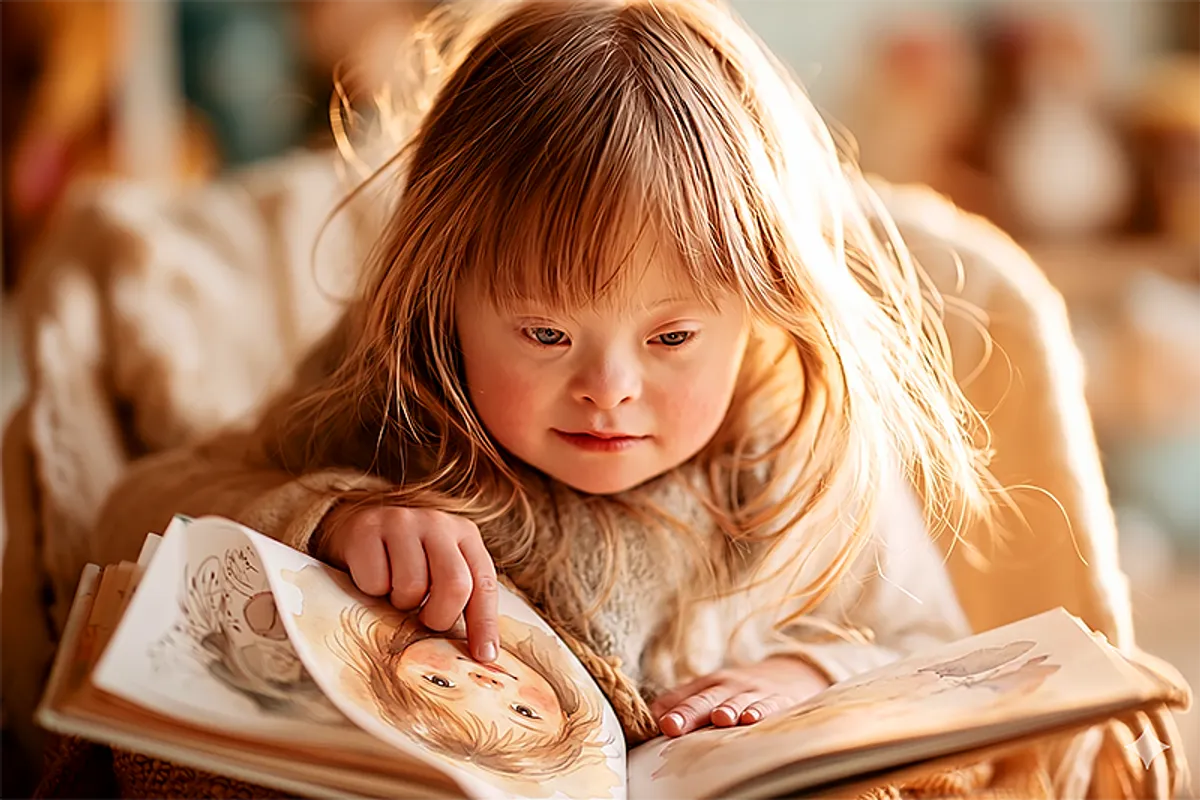
Most children’s books are not made for children with Down syndrome.
This is not an accusation — it’s a description of the market. Children’s book characters overwhelmingly represent a narrow range of features and presentations, and children whose appearance differs from that range grow up navigating a children’s book landscape where no one quite looks like them.
This matters, and the Down syndrome parent community knows it matters. The push for representation in children’s literature — characters with Down syndrome as protagonists, not background figures, not objects of lesson, but actual heroes with their own stories — is active and ongoing.
A personalized book is one answer to this, and in some ways the most direct one: it creates a protagonist who is not a general Down syndrome representation, but this specific child. Their features. Their name. Their particular qualities as what makes the hero capable.
The Representation Gap in Children’s Literature
Research on children’s responses to seeing themselves in stories consistently finds the same pattern: recognition produces engagement, identification, and a sense of being valued. Children who see characters who look like them in books are more likely to identify as readers, more likely to engage with stories, and more likely to develop positive associations with books that persist into adulthood.
For children with Down syndrome, the representation gap in mainstream children’s books is significant. Even well-intentioned efforts at inclusion often produce characters who are present as objects of other characters’ kindness, rather than as protagonists in their own right.
The distinction matters: a character with Down syndrome who is the recipient of a lesson about inclusion is a different kind of representation than a character with Down syndrome who is the hero — the one with agency, the one whose particular intelligence or humor or courage drives the story forward.
What Photo-Referenced Illustration Does
For children with Down syndrome, the photo-referenced illustration that distinguishes the best personalized books from name-insertion products is particularly meaningful.
Standard “personalized” books typically select from a limited range of character options. Even books that have added Down syndrome character options often produce a generic representation — a character who looks vaguely like “a child with Down syndrome” rather than like this specific child.
Photo-referenced illustration builds the character’s face from an actual photo of the child. The protagonist has their particular eyes, their specific expression, their recognizable features. This is not “Down syndrome representation” as a category — it is this child, illustrated as a hero. Our personalized storybook with your child’s face is built on exactly this capability.
For children who have rarely seen anyone who looks quite like them in a picture book, the moment of recognition is significant. Parents describe it consistently: the child goes still, looks carefully at the illustration, touches it, looks up.
That response is the mechanism working. It is not available from any stock illustration, however thoughtfully designed.
The Qualities That Drive the Story
The best personalized books for children with Down syndrome — as for all children — are the ones where the story is built around the child’s actual qualities, not their condition.
A story about a child who has Down syndrome is not the same as a story about a child whose curiosity, or humor, or particular kind of noticing saves the day — and that child happens to have Down syndrome.
The difference is everything. The first story is about the condition. The second is about the person.
When parents describe what they want for their children with Down syndrome, this is almost always what they say: I want a story where my child is the hero because of who they are. Not the hero despite anything. Not the hero as an example. The hero.
For Gift-Givers
Friends and family who want to give a meaningful gift to a child with Down syndrome often struggle with the question of what to give that acknowledges the child without centering their condition. The personalized book is one of the cleanest answers to this: it is simply a gift for this child, about this child, that could only have been made for them.
No disability framing required. No lesson. No inspiration. Just a child who is worth a whole story, illustrated to look like them, with their specific qualities as the thing the hero has.
That is exactly right.
Creating a personalized book for a child with Down syndrome? We build the character from a photo of the actual child, with their specific features illustrated as the hero. Start creating.
Frequently Asked Questions
Are personalized books good gifts for children with Down syndrome? They’re among the most meaningful options, particularly for books that use photo-referenced illustration — the protagonist is built from a photo of the actual child, not a generic stock representation. For children who rarely see characters who look like them in picture books, seeing their own features illustrated as the hero produces a quality of recognition that has genuine developmental significance.
Do personalized children’s books include Down syndrome characters? Some do, but with significant variation in quality. Many “inclusive” personalized books offer a Down syndrome character option selected from a limited set — this is better than nothing but produces a generic representation rather than a specific one. The best option for children with Down syndrome is photo-referenced illustration: the character is built from an actual photo of the child, producing a protagonist who looks like them specifically.
What should a personalized book for a child with Down syndrome include? The most important elements are: photo-referenced illustration (the character looks like the actual child), the child’s name, and a story that centers the child’s specific qualities — their humor, curiosity, courage, or whatever is genuinely true of them — as what makes the hero capable. The book should not be about Down syndrome; it should be about who this child is.
How do personalized books support children with Down syndrome? Research on representation in children’s literature consistently links seeing yourself in a protagonist role to stronger reading identity and engagement. For children with Down syndrome, who often navigate a children’s book landscape where no one looks quite like them, a personalized book that places them as the specifically illustrated hero addresses this gap directly. It’s not a therapeutic tool — it’s a story that sees them.
What age is appropriate for a personalized book for a child with Down syndrome? The developmental range for personalized books is broadly two through eight, and most children with Down syndrome fall within this window when they’re in the prime years for this type of gift. Developmental age matters more than chronological age for engagement; a personalized book works best when the child is at a stage where they recognize themselves in illustration and can follow a narrative arc. Parents are the best judges of where their child is developmentally.

20% off your first book.
One email. One code. No pressure.
We respect your inbox. Unsubscribe anytime.
Read Next
Personalized Books for Children with Selective Mutism: Quiet Voice, Strong Self
Children with selective mutism have a voice. They know who they are. The silence is situational, not foundational — and a book where they are the protagonist and the hero says exactly that: your voice exists. Your story exists. And here it is.
Personalized Books for Children with Visual Impairment: An Honest Assessment
Picture books are primarily a visual medium — and there's no honest way to pretend otherwise. But visual impairment exists on a wide spectrum, and what makes a personalized book meaningful for a child who is blind or low-vision deserves a careful, honest answer.
Personalized Books for Children with Sensory Processing Differences: Familiar, Predictable, Theirs
Children with sensory processing differences often develop particularly deep attachments to specific, familiar books — the same story, the same pages, the same words, again and again. A personalized book built around their own face and name takes this further: the familiar character is themselves.