
Personalized Books for Children with Selective Mutism: Quiet Voice, Strong Self
Children with selective mutism have a voice. They know who they are. The silence is situational, not foundational — and a book where they are the protagonist and the hero says exactly that: your voice exists. Your story exists. And here it is.
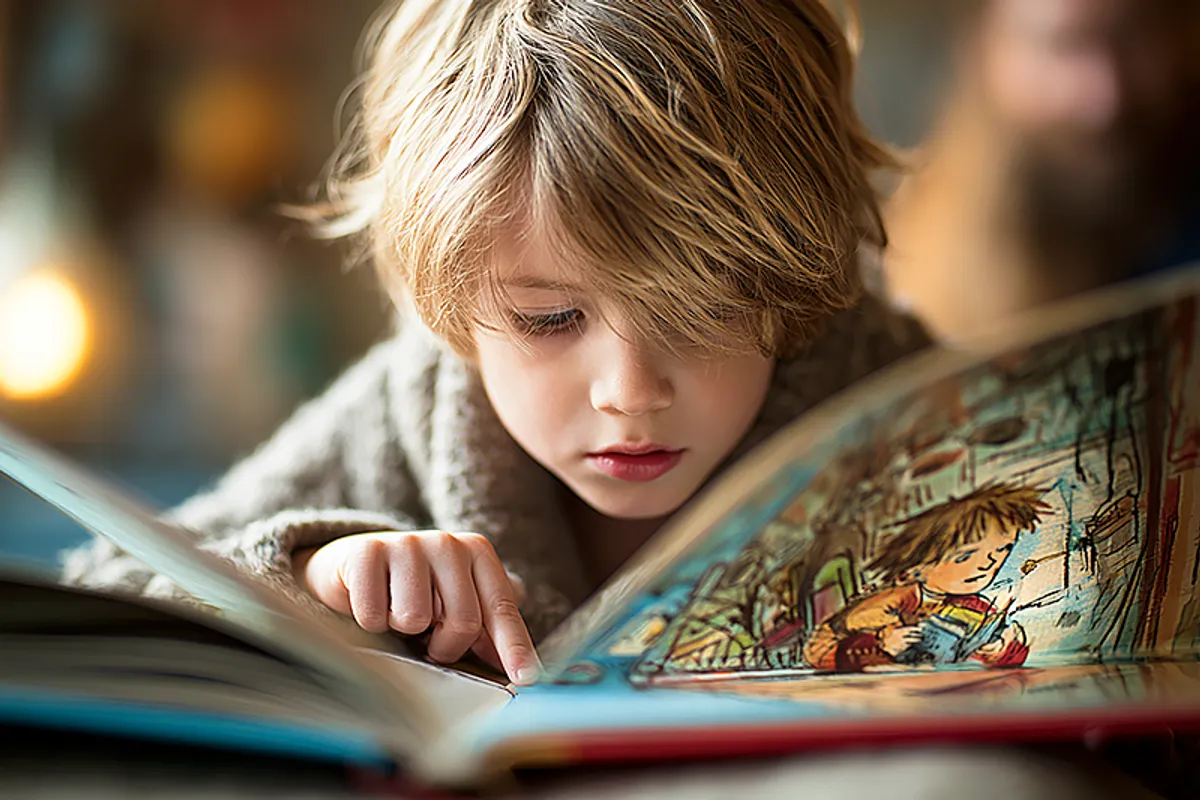
Children with selective mutism are not shy.
This is one of the most important things to understand about the condition, and one of the most frequently misunderstood. Selective mutism is an anxiety disorder — a specific and significant difficulty speaking in certain situations, most commonly social or public ones, despite full ability to speak in others. These children talk. They often talk a great deal at home, with trusted people, in environments where they feel safe. What they cannot do, in the situations that trigger their anxiety, is make speech happen.
The child who seems silent at school is often the child who narrates elaborate adventures at home. The child who speaks not a word at a birthday party is often the child whose family knows as the funniest person in the room. The silence is situational, not fundamental.
This distinction matters enormously for what kind of support, and what kind of gifts, serve these children well.
What Selective Mutism Is Not
Selective mutism is not:
- Shyness (though it may look like shyness from the outside)
- A choice (the child is not “refusing” to speak — the speech is blocked by anxiety)
- A sign of intellectual limitation
- A sign that the child doesn’t have things to say
- A personality trait that defines who they are
It is an anxiety condition that affects speaking in specific contexts. The child who lives with it has a complete inner life, a full self, and often acute observation skills developed precisely because they spend so much time listening rather than speaking.
The Book as Private Space
For children with selective mutism, home is typically the safe space — the place where their full voice is available. Books belong to this space. Reading is private, self-directed, and demands nothing social in return. There is no performance required, no risk of exposure, no anxiety about speaking.
A personalized book is a particular kind of safe space: one in which the child is specifically and explicitly the hero. Not “a child who is quiet but brave” — a generic inspirational frame that locates the child’s identity in their silence. But: you, as you actually are, as the protagonist of a story built around your specific qualities.
The child with selective mutism has been observed — carefully, specifically — and has been reflected back. This is what a personalized book can offer: a mirror, held with precision.
The Hero Who Speaks Without Needing to Speak
There’s something quietly important about a personalized book’s structure: the hero does things. They act, discover, solve, triumph. The story doesn’t require that the hero speak to accomplish these things — the hero’s inner life and agency are the engine of the narrative.
For a child whose experience of public life is often defined by what they cannot do (speak, in those contexts), a story where the protagonist’s power doesn’t depend on speaking is worth something. Not as a therapeutic prescription — it’s a picture book, not a treatment — but as a small, private piece of evidence that being the hero of your own story doesn’t require your voice to be audible to everyone.
For Gift-Givers
If you are giving a personalized book to a child with selective mutism, a few practical notes:
The photo-referenced version — where the illustrated character is built from a photo of the actual child — will land more powerfully than a name-insertion product. The recognition response (the child sees themselves as the hero) is particularly meaningful for children whose sense of public visibility is complicated by their condition. The book provides a form of visibility that is entirely safe.
The gift works whether or not the child acknowledges it out loud. Parents of children with selective mutism are experienced at reading non-vocal reactions. The absorbed stillness, the careful attention to the illustrations, the request to read it again — these are the responses that matter, and they don’t require the child to say anything.
If you’re ordering the book, you’ll need the child’s photo, their name, and some information about their personality and interests from their parents. Ask the parents what this child is like at home — you’ll get the real picture, not the version defined by the silence.
Creating a personalized book for a child? We build the character and story around who they actually are. Start creating.
Frequently Asked Questions
Are personalized books good for children with selective mutism? They’re a particularly good fit. Children with selective mutism have a full self and a full inner life — the silence is situational anxiety, not a definition of who they are. A personalized book that places them as the illustrated protagonist of their own adventure provides a form of recognition that requires nothing social in return. It’s a private, self-directed experience in which they are, unambiguously, the hero.
What is a good gift for a child with selective mutism? Gifts that honor the child’s inner life without requiring social performance work well. Books are natural fits — they are private, self-paced, and demand nothing social in the moment of engagement. A personalized book built around this specific child’s face and name is particularly strong: it places them at the center of a story made for them, which is a form of recognition they can receive quietly.
Is selective mutism the same as shyness? No. Selective mutism is an anxiety disorder in which speech is blocked in specific contexts, not a personality trait. Children with selective mutism typically speak fully in safe, trusted environments. The inability to speak in certain contexts is not a choice and not a sign of limited inner life — it is an anxiety response that can be supported with appropriate therapeutic approaches.
How does a personalized book help with anxiety in children? A personalized book is not a therapeutic intervention. It is a story made for one specific child. For anxious children, including those with selective mutism, books offer a safe, self-directed engagement with narrative. The personalized element — a protagonist who looks like them, shares their name, is defined by their specific qualities — provides a form of recognition that is entirely private. For children whose public experience is marked by difficulty, a private space in which they are the hero is worth something.
What should I tell the creator of a personalized book for a child with selective mutism? Give the child’s name, a clear photo, and information about their personality and interests from a trusted caregiver — specifically, who this child is at home, where they’re fully themselves. Don’t frame the story around the condition or the silence; frame it around who the child is. Their interests, their humor, the things they notice, the qualities that make them them. The silence is not the story. The child is the story.
Are there picture books specifically about selective mutism? Yes — there is a small but growing body of children’s literature that addresses selective mutism and anxiety in age-appropriate ways. These serve a different function from personalized books: they help children understand their experience, feel seen in their difficulty, and see characters who share their challenges. A personalized book does something different — it places the child as hero in a story built around their specific identity, without the condition as the frame. Both have value.

20% off your first book.
One email. One code. No pressure.
We respect your inbox. Unsubscribe anytime.
Read Next
Personalized Books for Children with Down Syndrome: The Hero Who Looks Like Them
Children with Down syndrome have often spent years in stories where no one looks like them. A personalized book that places them as the hero — with their face in illustration, their qualities driving the plot — isn't representation as a gesture. It's what representation is supposed to do.
Personalized Books for Children with Visual Impairment: An Honest Assessment
Picture books are primarily a visual medium — and there's no honest way to pretend otherwise. But visual impairment exists on a wide spectrum, and what makes a personalized book meaningful for a child who is blind or low-vision deserves a careful, honest answer.
Personalized Books for Children with Sensory Processing Differences: Familiar, Predictable, Theirs
Children with sensory processing differences often develop particularly deep attachments to specific, familiar books — the same story, the same pages, the same words, again and again. A personalized book built around their own face and name takes this further: the familiar character is themselves.