
Personalized Books for Children with Sensory Processing Differences: Familiar, Predictable, Theirs
Children with sensory processing differences often develop particularly deep attachments to specific, familiar books — the same story, the same pages, the same words, again and again. A personalized book built around their own face and name takes this further: the familiar character is themselves.
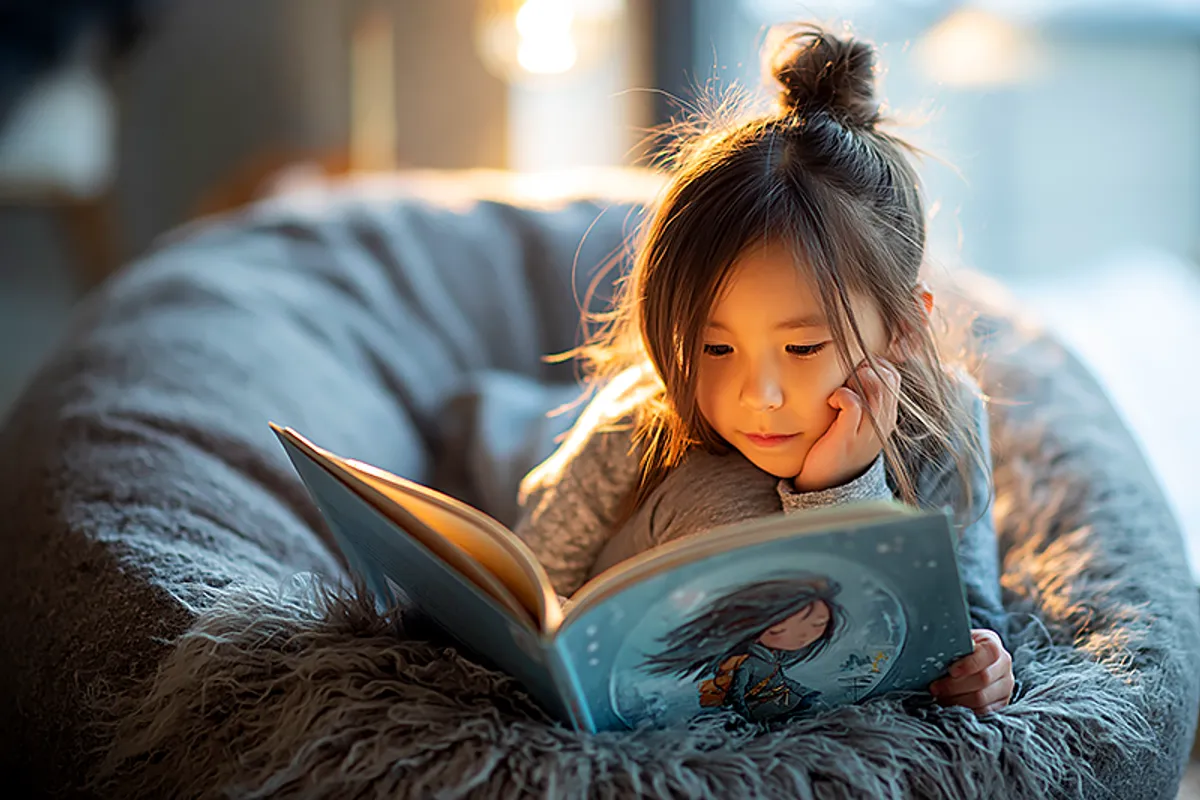
Children with sensory processing differences often develop intense, specific attachments to particular books.
The same story, read in the same way, with the same words on the same pages, night after night. Parents of sensory kids know this pattern well — the demand to read it again, the distress when a page is skipped, the deep and genuine pleasure the child takes from a narrative experience that is completely predictable.
This is not a quirk to manage or redirect. It is a feature of how some children engage with stories — and it has implications for what makes a good book.
What Sensory Processing Differences Mean for Reading
Sensory processing differences refer to how the nervous system receives and responds to sensory input. For some children, input that others handle easily — sounds, textures, visual complexity, unexpected stimuli — can be overwhelming, effortful, or dysregulating.
Books are one of the gentler sensory experiences available. They are quiet. They are self-paced. The child controls the engagement: they can look at the page at their own speed, return to pages that interest them, and close the book when they’ve had enough. There is no performance requirement, no social pressure, no unpredictable element.
A picture book that a child loves is a regulated sensory experience — pleasurable, predictable, and fully within the child’s control.
Predictability as a Feature
Children who find unpredictability difficult often develop preferences for books where they know exactly what comes next. The story they’ve memorised isn’t just a story they like — it’s a story whose predictability is part of what makes it safe to engage with.
Parents sometimes worry that a child wanting the same book repeatedly is a problem. Reading research and sensory-aware child development literature both suggest otherwise: repeated reading of beloved books builds vocabulary, comprehension, narrative understanding, and positive associations with literacy. The child who asks for the same book twenty nights in a row is doing real reading development work, every time.
A personalized book — where the character is this specific child, where the story has been built around them — has particular potential for this kind of deep, repeated engagement. The child’s investment in the story is higher because they are in it. The familiar character is themselves.
Photo-Referenced Illustration and Sensory Familiarity
For many children with sensory processing differences, familiarity is comfort. They know what they look like. They know their own face. A character built from their own photo — who has their specific features, their expression, their coloring — is not a stranger. It is, in the most direct way possible, someone they already know.
This is the advantage of photo-referenced personalized books over stock character libraries: the character isn’t an approximation of the child. It is the child, illustrated. The recognition response — the moment when the child sees themselves in the book — is often particularly strong for children who have developed the kind of intense visual attention that sensory kids frequently have.
Giving a Personalized Book to a Sensory Child
A personalized book is a good gift choice for sensory children precisely because it is:
Self-directed. The child controls the pace, the duration, and the re-reading frequency. Nothing is imposed.
Predictable after the first reading. Once a child knows the book, it becomes exactly what sensory kids value: a familiar, reliable experience they can reproduce on demand.
Specifically theirs. The hero looks like them, is named after them, has their qualities. The book doesn’t belong to a category of children — it belongs to this child.
Physically calm. A picture book requires no noise, no physical complexity, no social interaction. It is one of the quieter sensory experiences available.
For gift-givers who are not the child’s primary carer, a personalized book is also practical: it requires no knowledge of the child’s specific sensory profile, avoids the texture/sound/visual complexity issues that can affect other toy categories, and the familiar-character element means the book can be read in calm moments without imposing anything unexpected.
A Note on SPD and Other Conditions
Sensory processing differences occur independently and also frequently alongside other conditions: autism, ADHD, anxiety, developmental differences. This post uses “sensory processing differences” as a broad term; the specific experience varies enormously between children.
A personalized book is not a therapeutic intervention. It is a book, with a character who looks like the child, built around who they are. It works for sensory kids through the same mechanisms it works for any child — familiarity, recognition, the pleasure of a story about yourself — with the additional relevance that these specific features land particularly well for children who value predictability and familiar environments.
Creating a personalized book for a child with sensory processing differences? We build the story and character around who they actually are — their face, their name, the qualities that make them exactly themselves. Start creating.
Frequently Asked Questions
Are personalized books good for children with sensory processing disorder? They’re well-suited. Picture books are already a low-demand, self-paced sensory experience, and personalized books add the element of a familiar character — one who looks specifically like the child — that children with sensory processing differences often respond to particularly strongly. The predictability that develops after repeated reading also matches well with what many sensory kids find most engaging.
What makes a book good for a child with sensory differences? Self-paced engagement, predictable narrative structure, and the absence of unexpected sensory demands (loud sounds, complex textures, flashing lights). Picture books satisfy all of these. A personalized book adds a familiar protagonist — the child themselves — which can create the kind of deep investment that leads to the repeated reading that builds literacy.
Do children with SPD like personalized books? Children with sensory processing differences vary widely, so there’s no universal answer. What is consistent is that many sensory kids develop strong attachments to specific, familiar books — and a personalized book built around their own appearance and name has a high likelihood of becoming exactly that kind of beloved, repeatedly-requested object.
Is a personalized book a good gift for a child with autism? Sensory processing differences and autism frequently co-occur, but autism is its own distinct experience. For autistic children specifically, a personalized book offers similar advantages: self-paced engagement, a familiar protagonist, and the predictability that develops through repeated reading. For gift-givers, it’s worth knowing the child’s specific interests to inform the story themes. See also the post on personalized books for autistic children for more specific guidance.
What age is best for a personalized book for a child with sensory processing differences? The broad developmental window is two through eight. For children with sensory processing differences, the early end of this range can work particularly well — young sensory children who are building their relationship with books benefit from a highly engaging, self-relevant text that invites repeated engagement. The child who is two and wants the personalized book every night is building exactly the literacy foundation they need.

20% off your first book.
One email. One code. No pressure.
We respect your inbox. Unsubscribe anytime.
Read Next
Personalized Books for Children with Down Syndrome: The Hero Who Looks Like Them
Children with Down syndrome have often spent years in stories where no one looks like them. A personalized book that places them as the hero — with their face in illustration, their qualities driving the plot — isn't representation as a gesture. It's what representation is supposed to do.
Personalized Books for Children with Selective Mutism: Quiet Voice, Strong Self
Children with selective mutism have a voice. They know who they are. The silence is situational, not foundational — and a book where they are the protagonist and the hero says exactly that: your voice exists. Your story exists. And here it is.
Personalized Books for Children with Visual Impairment: An Honest Assessment
Picture books are primarily a visual medium — and there's no honest way to pretend otherwise. But visual impairment exists on a wide spectrum, and what makes a personalized book meaningful for a child who is blind or low-vision deserves a careful, honest answer.