
Personalized Books for Children with Visual Impairment: An Honest Assessment
Picture books are primarily a visual medium — and there's no honest way to pretend otherwise. But visual impairment exists on a wide spectrum, and what makes a personalized book meaningful for a child who is blind or low-vision deserves a careful, honest answer.
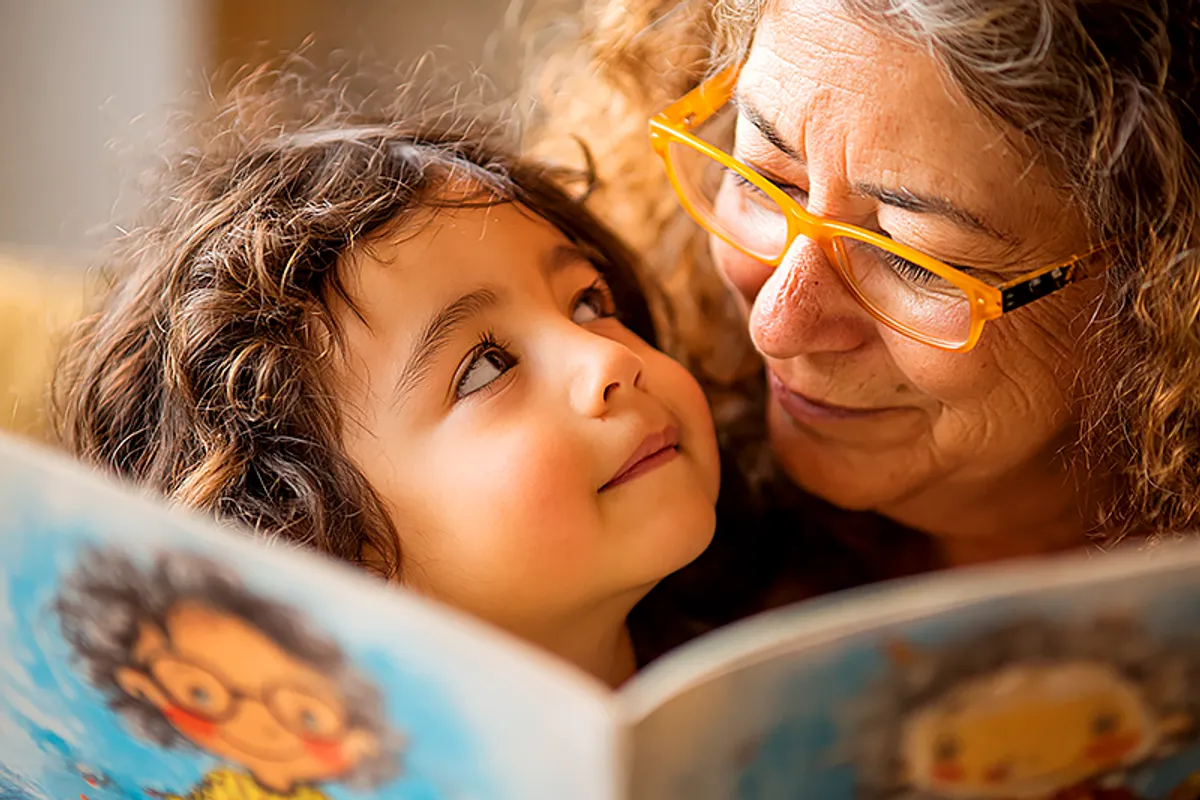
Let’s start with honesty.
Picture books are primarily a visual medium. The illustration carries a significant portion of the meaning. A child who cannot see the illustrations experiences a picture book differently from a child who can — and a personalized book that emphasizes the visual recognition response (“the character looks like you!”) has a limited form of that resonance for a fully blind child.
This is worth saying clearly because the alternative — pretending that all books work equally for all children, or implying that a visual product is ideal for someone who can’t see it — would be condescending. Families of visually impaired children have enough of people telling them things should work when they don’t.
What follows is an honest account of where personalized books add value for visually impaired children, and where they don’t.
Visual Impairment Is a Spectrum
“Visual impairment” covers an enormous range of experience. It includes:
- Low vision: Significant visual limitation that cannot be fully corrected with glasses or contact lenses, but with remaining functional vision. Many children with low vision use books, including picture books, with appropriate support.
- Cortical visual impairment (CVI): A neurological condition affecting how the brain processes visual information. Children with CVI may have functional vision but process visual information differently — high contrast, simple compositions, and familiar faces are often more accessible.
- Complete blindness: No functional vision. Books are experienced entirely through read-alouds, tactile elements, or Braille text.
These are different experiences requiring different approaches. A single answer doesn’t cover all of them.
Where Personalized Books Add Real Value
For children with low vision
Children with low vision who use picture books benefit from the same things all children benefit from: a character who looks like them, a story where they are the protagonist. For some low vision children, large, clear, high-contrast illustration — the kind that good personalized book illustration produces — is more accessible than the cluttered pages of many standard picture books.
The recognition response — seeing an illustrated character who specifically looks like them — is available to many low vision children in a way it may not be for blind children. This is worth knowing when making a decision about what to order.
For children with CVI
Children with cortical visual impairment often respond particularly well to illustrations of familiar faces. The personalized character — built from a photo of the actual child — is, in a sense, the most familiar possible face. Whether this specific advantage applies depends on the individual child’s CVI profile, which varies considerably. It’s worth discussing with the child’s specialists.
For the family
Here is something that doesn’t get said enough: a personalized book with a character who looks like a blind child has value for the family of that child, not only for the child directly.
For parents who read aloud — which is the primary mode of book-sharing for blind children — a book where the hero looks like their child creates a different experience of reading together. The child hears themselves in the story. The parent sees their child in the illustrations. The shared experience of the book is richer for both.
For sighted siblings, a personalized book about their blind sibling is a way to engage with the sibling’s identity through a medium they understand. It also models that this sibling deserves to be the hero of stories — which is not nothing.
The read-aloud experience
A personalized book read aloud to a blind child is not the same experience as seeing it, but it is not nothing. The child hears their name throughout the story. They hear their specific qualities named. They hear an adventure built around who they specifically are.
The narrative resonance — I am the protagonist of this story, this story was made for me — is available through sound in a way it isn’t available through visual recognition alone.
What Personalized Books Cannot Do Here
A personalized book cannot substitute for dedicated accessible formats — Braille editions, audiobooks, or tactile picture books with raised illustrations. For a child whose primary relationship with books is through touch or sound, these formats are more foundational.
A personalized book is not a solution to visual impairment. It is a story that happens to be made for one specific child. For a visually impaired child, that specificity is present in the text, the name, and the read-aloud experience — but not in the visual recognition that is its most dramatic feature for sighted children.
The Bottom Line
For children with low vision or CVI: a personalized book with photo-referenced illustration may add real value, and the decision should factor in the child’s specific visual capabilities and how they engage with picture books.
For fully blind children: the value is in the read-aloud experience and in what the book means to the family — real, but different in character from what sighted children experience.
For gift-givers who aren’t sure: asking the parents what kinds of books this child engages with and enjoys is the right move. They know their child’s relationship with books better than any product description can tell you.
Creating a personalized book for a child? We build the story around who they actually are — their face, their name, the specific qualities that make them themselves. Start creating.
Frequently Asked Questions
Are personalized books suitable for blind children? Partially. A personalized book read aloud to a blind child offers narrative value — the child’s name, qualities, and an adventure built specifically around them — but the visual recognition response, which is the most dramatic feature for sighted children, is not available to fully blind children. For families who read aloud extensively, a personalized book can be a meaningful addition to a blind child’s library. It is not, however, a substitute for accessible formats like Braille or audiobooks.
Are personalized books good for children with low vision? More directly than for fully blind children. Children with low vision who use picture books may benefit from the same features all children benefit from — a protagonist who looks like them, clear and high-contrast illustration, and a story built around their specific qualities. The decision should factor in how this specific child engages with picture books and what visual capabilities they have.
What makes a book accessible for visually impaired children? The most accessible formats are Braille text, audiobooks, tactile picture books with raised illustrations, and read-aloud editions. For children with low vision, high-contrast illustration, clear composition, and large type are practical accessibility features. Personalized books with photo-referenced illustration may offer additional engagement for some low vision readers, particularly those with CVI who respond well to familiar faces.
Can I give a personalized book to a family with a visually impaired child? Yes, but with awareness. If the child has low vision and uses picture books, a personalized book with photo-referenced illustration is a genuinely good gift. If the child is fully blind, the gift is still meaningful — it will be read aloud, and the narrative specificity (their name, their qualities, their adventure) is present through sound — but the visual element that makes it most special for sighted children will not land the same way. Asking the parents what kinds of books this child engages with is the most reliable approach.
Do personalized books help with CVI (cortical visual impairment)? Children with CVI often respond particularly well to illustrations of familiar faces. A photo-referenced personalized book character — built from the actual child’s photo — is the most familiar possible face. Whether this helps depends on the specific child’s CVI profile, which varies considerably. This is worth exploring with the child’s vision specialist.

20% off your first book.
One email. One code. No pressure.
We respect your inbox. Unsubscribe anytime.
Read Next
Personalized Books for Children with Down Syndrome: The Hero Who Looks Like Them
Children with Down syndrome have often spent years in stories where no one looks like them. A personalized book that places them as the hero — with their face in illustration, their qualities driving the plot — isn't representation as a gesture. It's what representation is supposed to do.
Personalized Books for Children with Selective Mutism: Quiet Voice, Strong Self
Children with selective mutism have a voice. They know who they are. The silence is situational, not foundational — and a book where they are the protagonist and the hero says exactly that: your voice exists. Your story exists. And here it is.

Personalized Books for Children with Sensory Processing Differences: Familiar, Predictable, Theirs
Children with sensory processing differences often develop particularly deep attachments to specific, familiar books — the same story, the same pages, the same words, again and again. A personalized book built around their own face and name takes this further: the familiar character is themselves.