Child Development

8 articles about child development

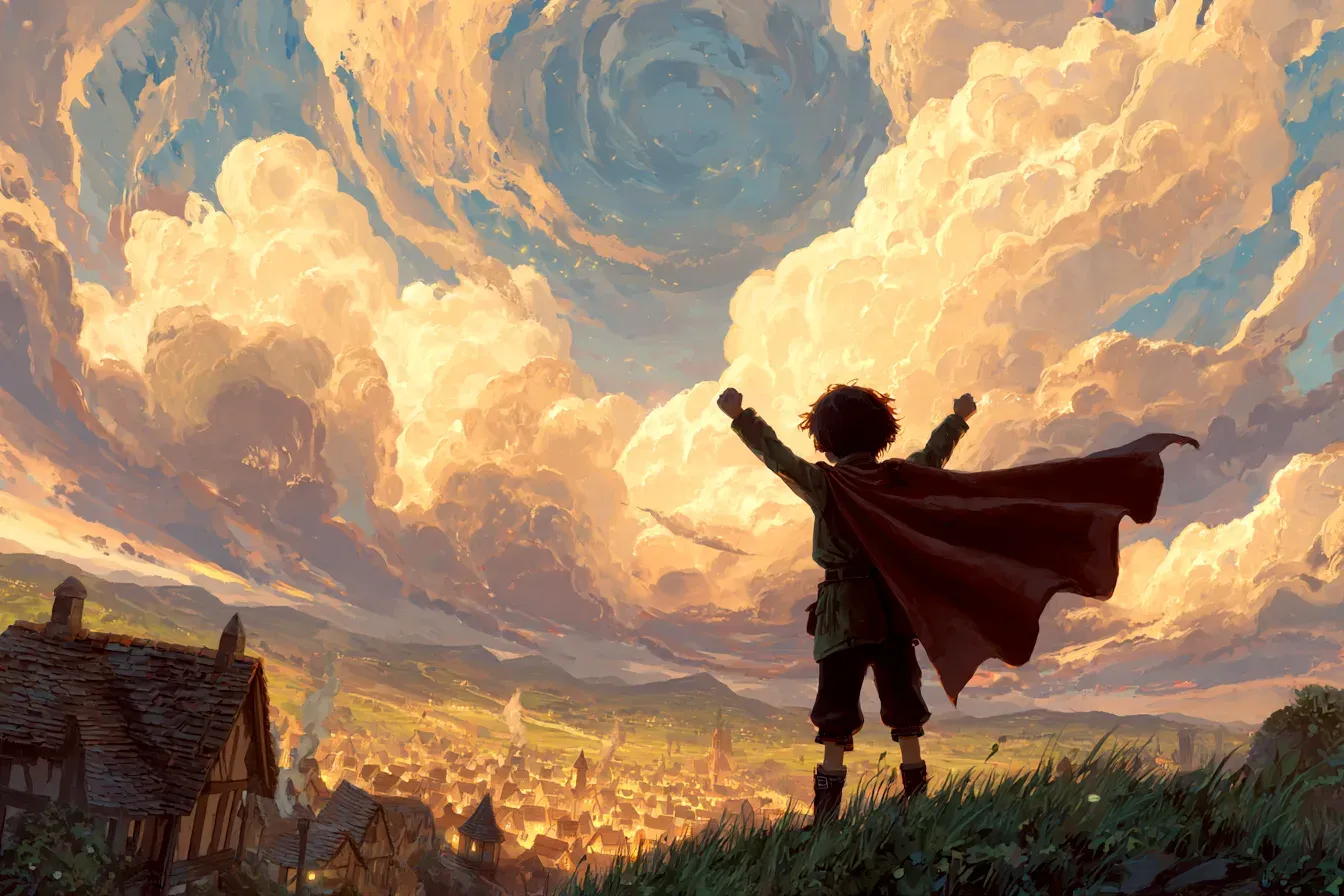
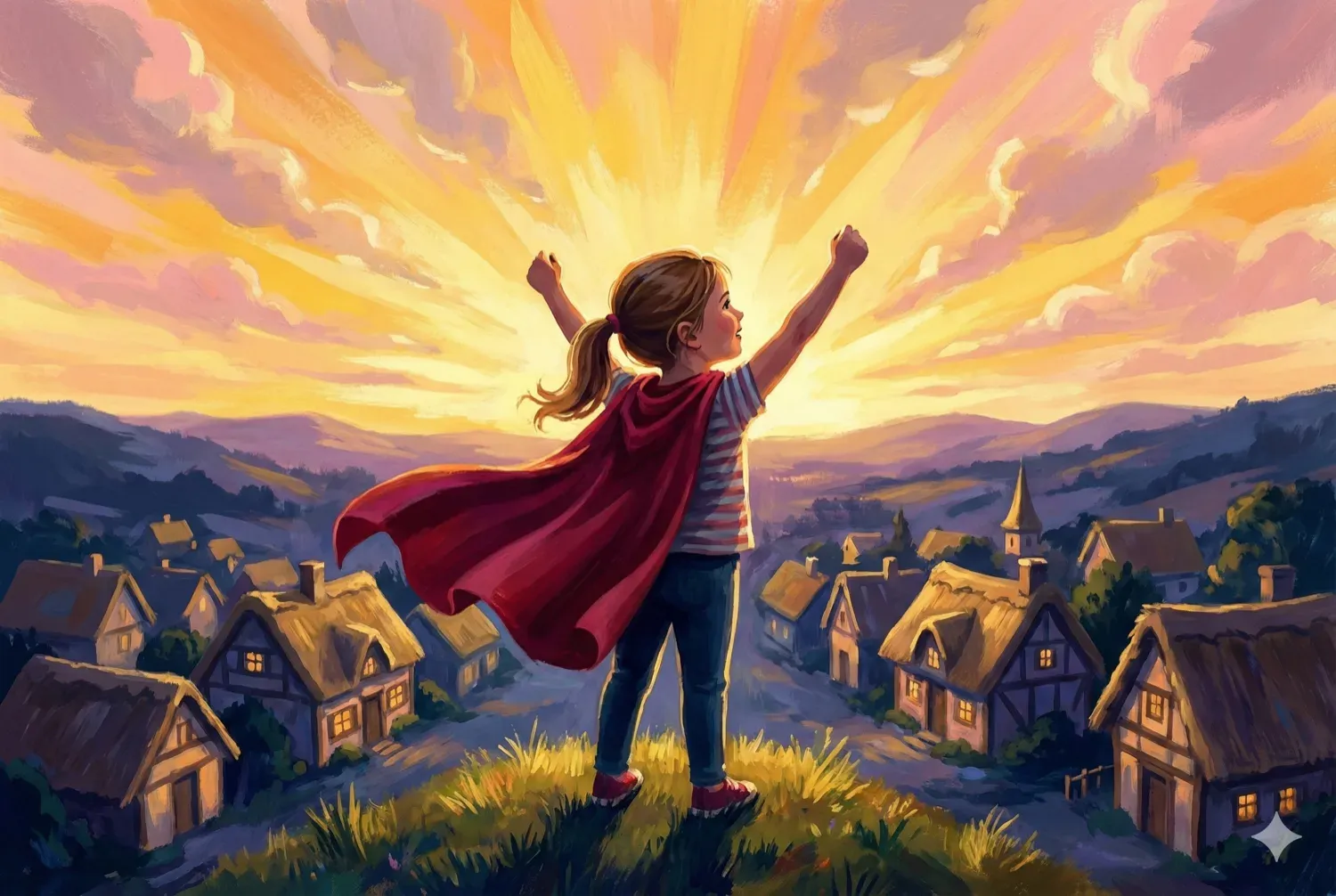
A child wearing a flowing cape stands on a grassy hilltop at golden hour, arms raised triumphantly toward the sky. Below in the valley, a storybook village with thatched roofs glows in warm light. The child is silhouetted against dramatic clouds. Painterly style, rich warm colors, sense of adventure and possibility.

Every Child a Hero

Why the stories we tell children about themselves matter more than we think.

Read Article: Every Child a Hero

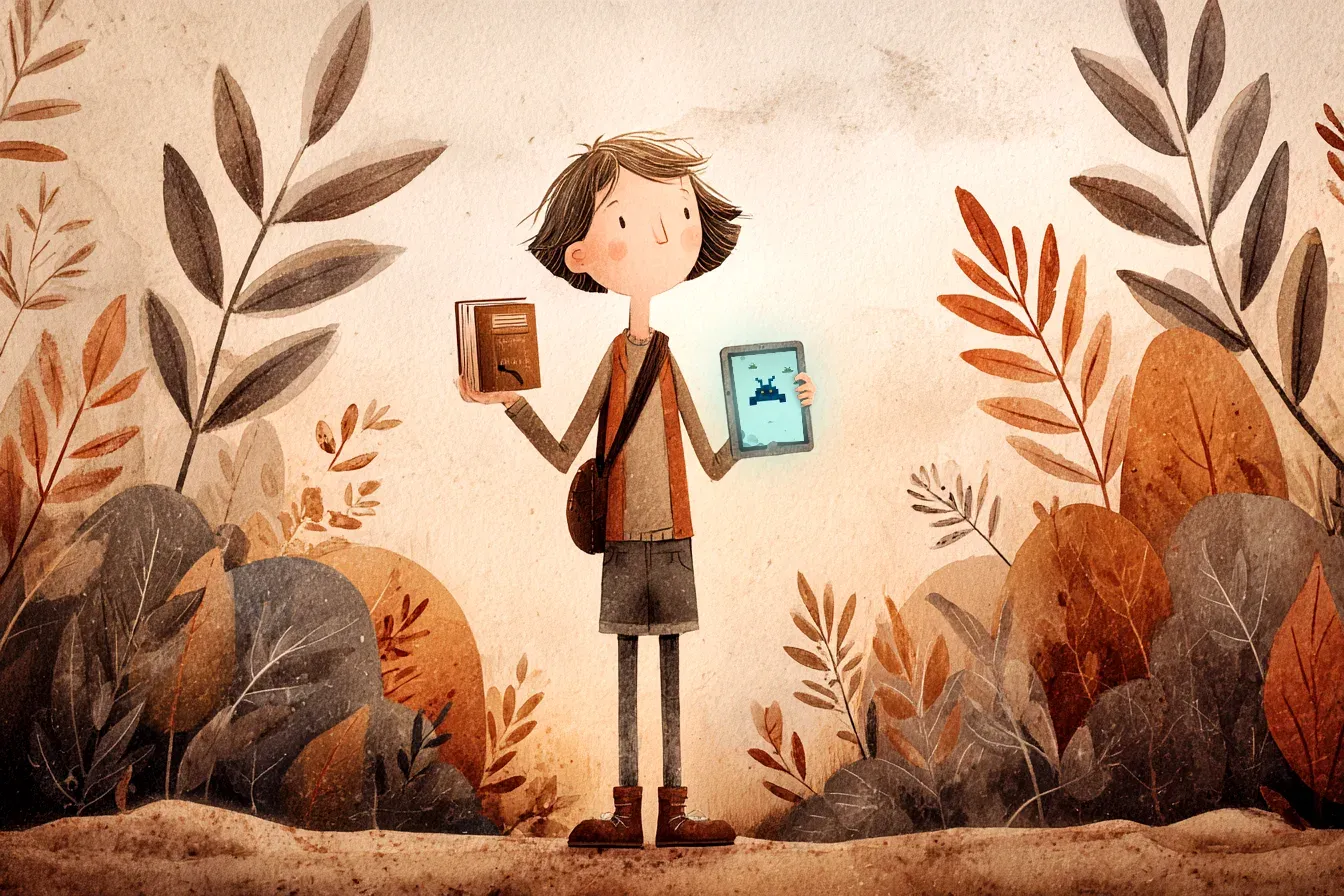
A child standing among autumn foliage, holding a physical book in one hand and a glowing tablet in the other, looking toward the book. Warm earth-tone watercolor palette with muted browns, oranges, and grays. Storybook illustration style, textured paper feel. The child appears contemplative, not conflicted — choosing, not torn.

Are Kids Reading Enough? The Numbers, the Truth, and What Comes Next

Literacy is in crisis. But the solution isn't complicated — it's putting stories in children's hands, whatever form they take.
Read Article: Are Kids Reading Enough? The Numbers, the Truth, and What Comes Next
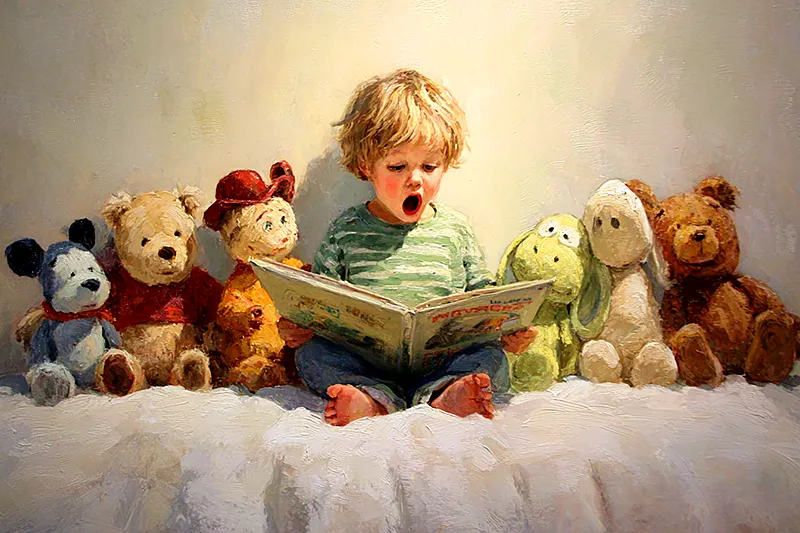
A small child sitting on a rug, holding an open picture book in their lap, mouth open mid-word as if reciting the text from memory. The book faces outward, away from the child, as if they are reading to an audience of stuffed animals arranged in a semicircle. Warm morning light from a window. The child's posture is confident, proud. Painterly, soft golden tones, intimate and quiet.

When Your Child Knows the Book by Heart

They're not memorizing. They're learning to read.
Read Article: When Your Child Knows the Book by Heart
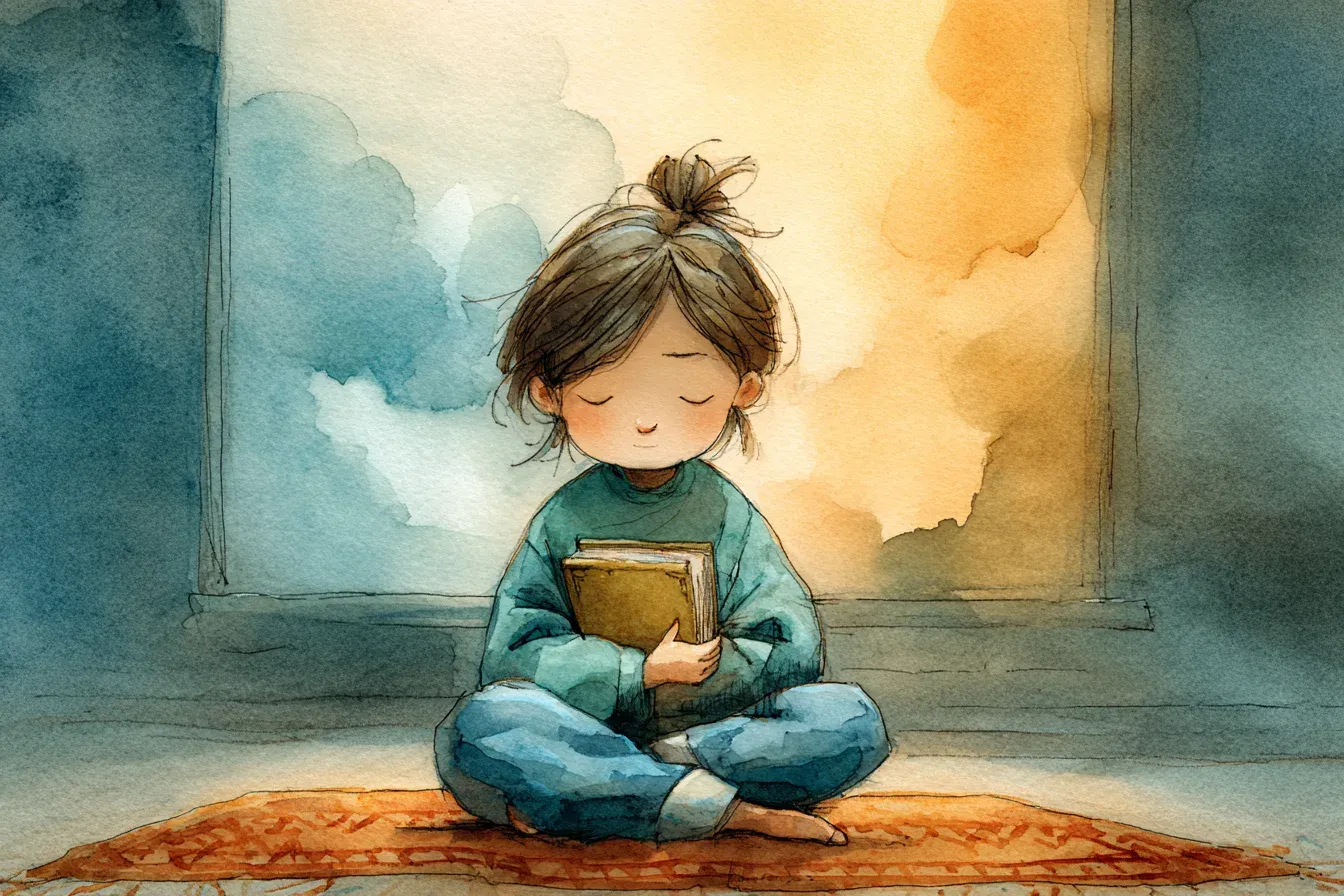
A child sitting cross-legged on a rug, holding a closed book against their chest like something precious. Eyes closed. Not reading. Just holding. Around them, faint watercolor shapes suggest emotions — a soft blue cloud, a warm amber glow, a gentle shadow — none threatening, all present. The room is quiet. No adults visible. The child is not being taught anything. They are being accompanied. Soft natural light from a window. Storybook illustration style, muted palette, intimate.

What Stories Owe Children (And What They Don't)

Stories don't owe children lessons. They owe them the dignity of being felt.
Read Article: What Stories Owe Children (And What They Don't)
A small child holding a flashlight, standing at the entrance of a gently dark room. Their shadow stretches behind them large and heroic. Expression determined but nervous. The flashlight creates a warm golden beam cutting through soft purple darkness. Storybook illustration style. The feeling of small bravery about to happen.

Fear Into Courage

Stories don't eliminate fear. They teach children that fear isn't the end of the sentence.
Read Article: Fear Into Courage
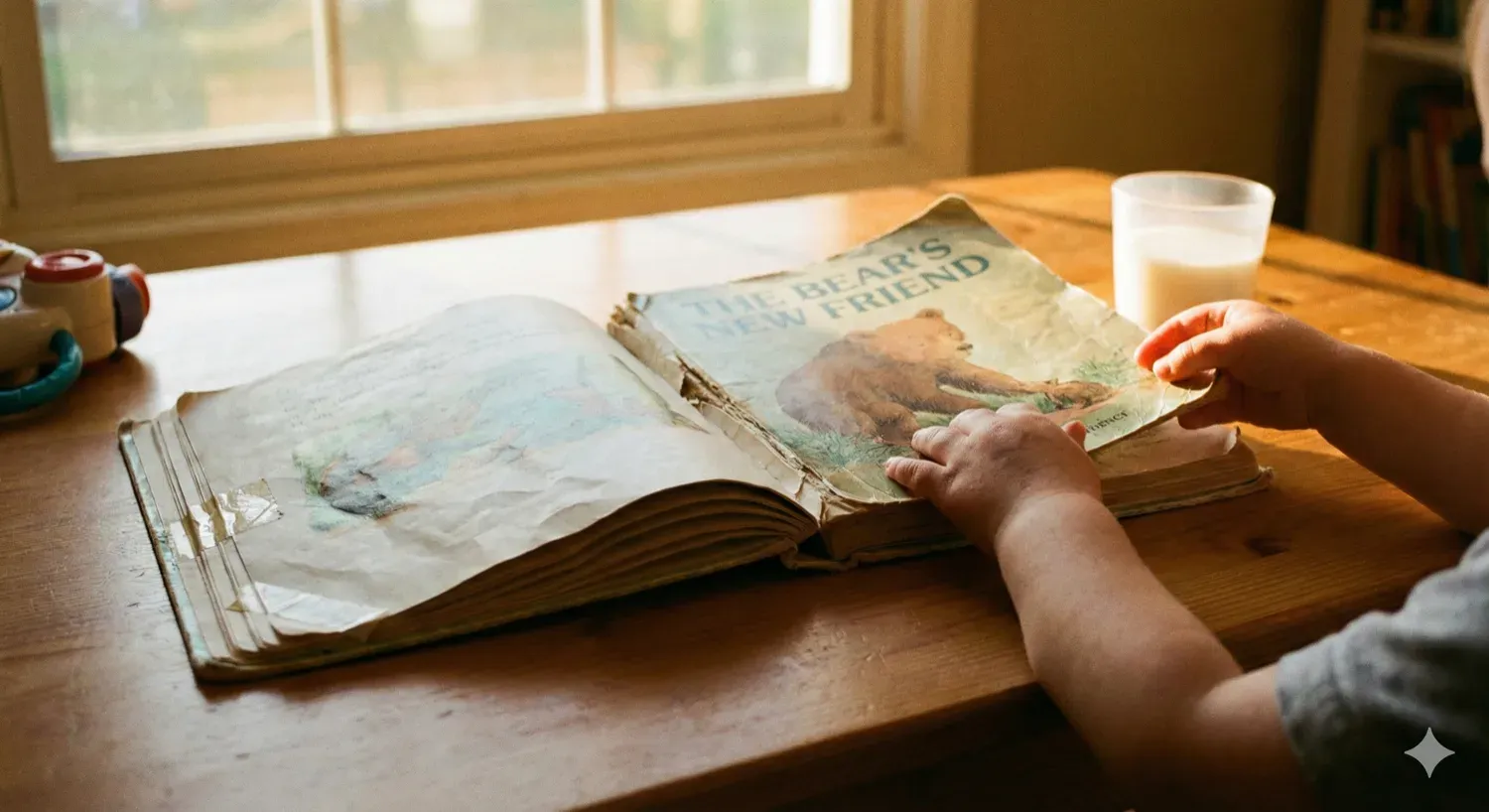
A well-worn children's book lies open, spine cracked and soft, pages slightly wavy from many readings. Small child's hands reach to turn back to the beginning. The book shows signs of love: a small tear taped, corners rounded. Evening light. The beautiful wear of a book that has been read hundreds of times. Nostalgic, warm, cherished.

Why They Want It Again

When a child asks for the same book every night, they're not stuck. They're building something.
Read Article: Why They Want It Again
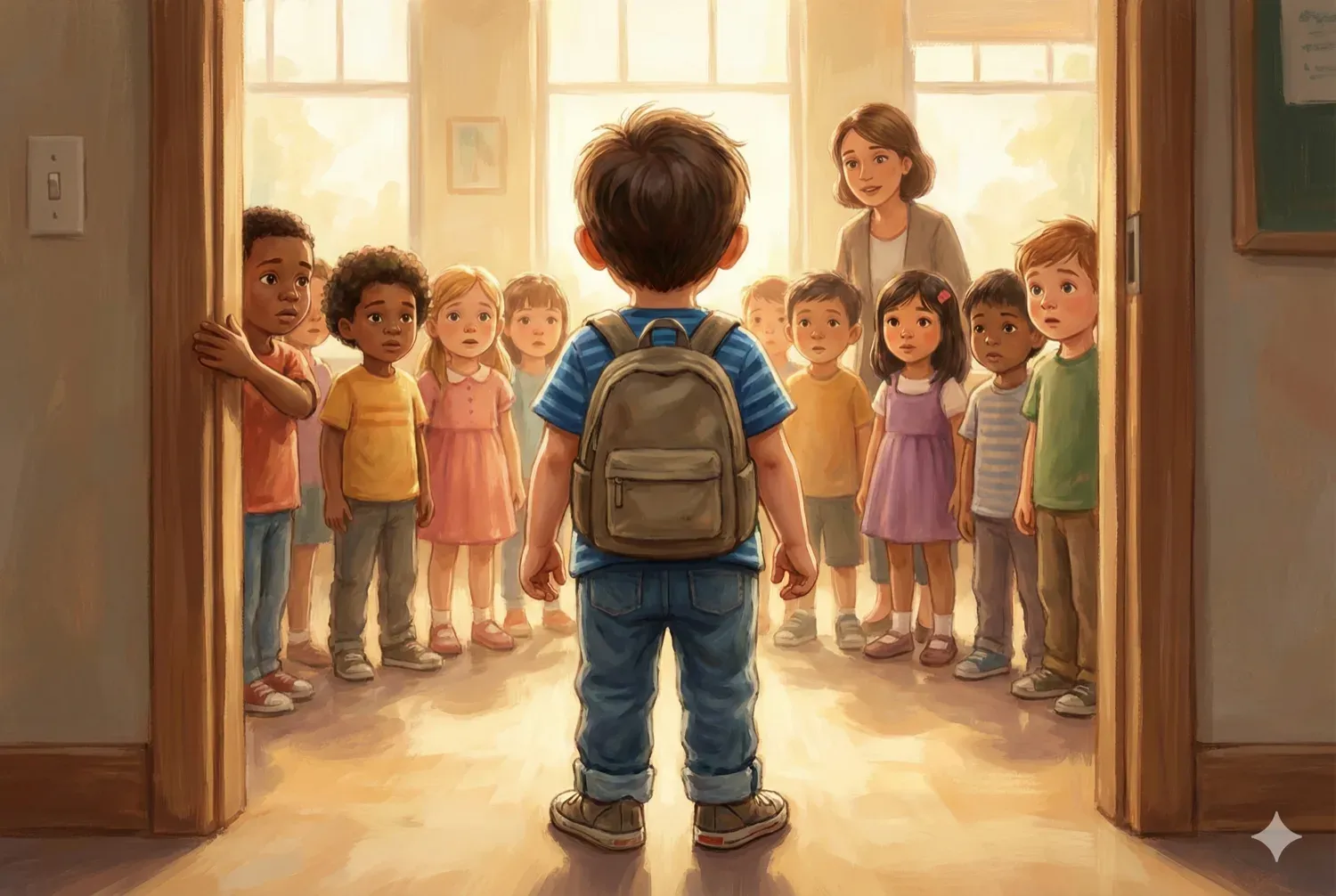
A small child standing at the threshold of a school classroom doorway, one hand on the doorframe, looking in with quiet determination. Backpack on, shoulders slightly uncertain but feet planted forward. Warm morning light streams through windows inside. No cape, no costume. Just a real child in a real moment of everyday courage. Painterly style, soft warm palette, intimate perspective.

What Makes a Child a Hero? (Hint: It's Not a Cape)

Heroes don't need superpowers. They need courage. For children, heroism looks like walking into a new classroom, saying sorry, or trying again after falling.
Read Article: What Makes a Child a Hero? (Hint: It's Not a Cape)
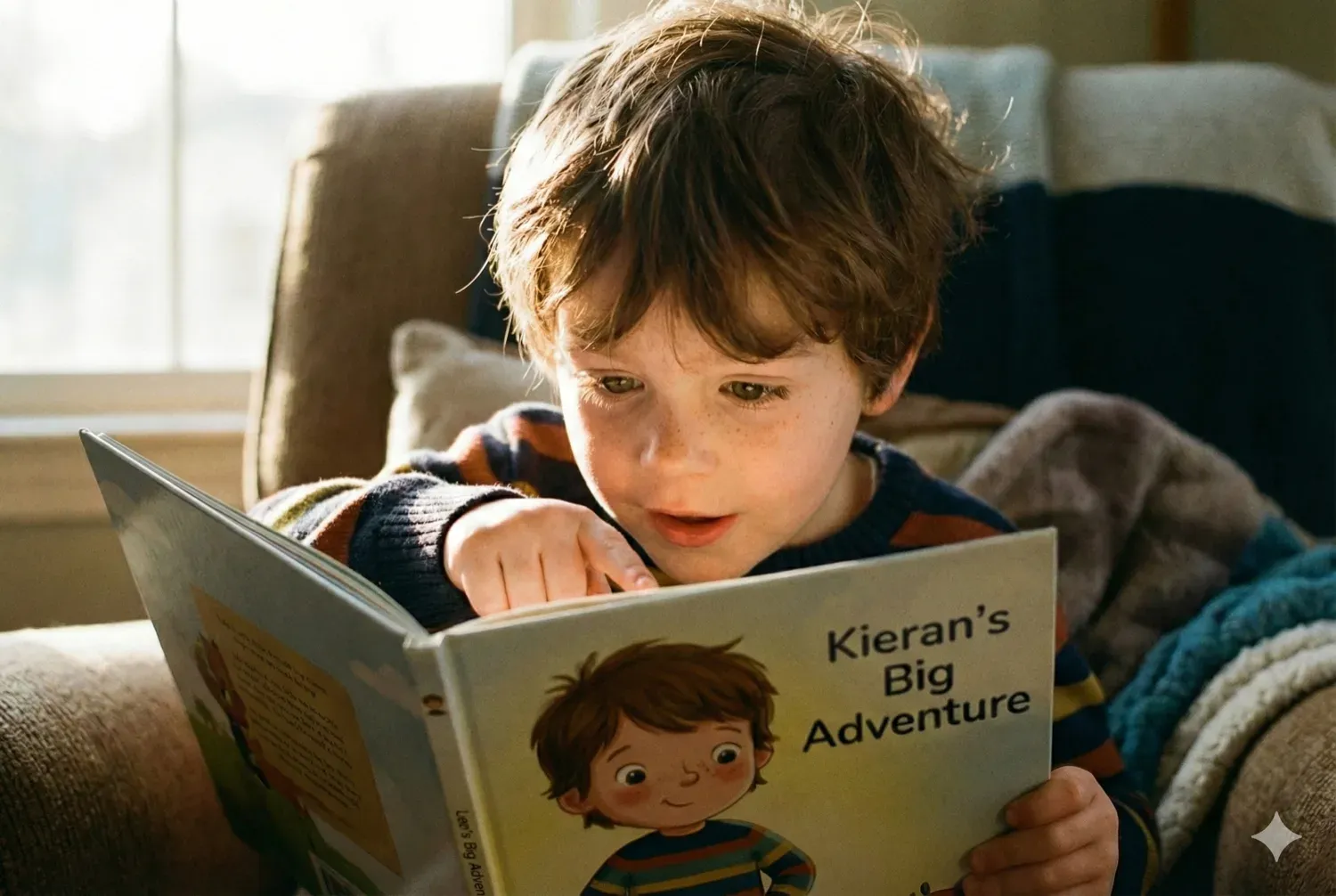
A child's face lit with wonder and recognition, looking down at an open storybook where the illustrated character looks just like them. The child's finger points at the page. Soft focus on the background, sharp on the expression of discovery. The magical moment of seeing yourself in a story. Warm, joyful, intimate.

When They See Themselves

A child recognizing their own face in a story isn't novelty. It's identity taking root.

Read Article: When They See Themselves