Reading

20 articles about reading

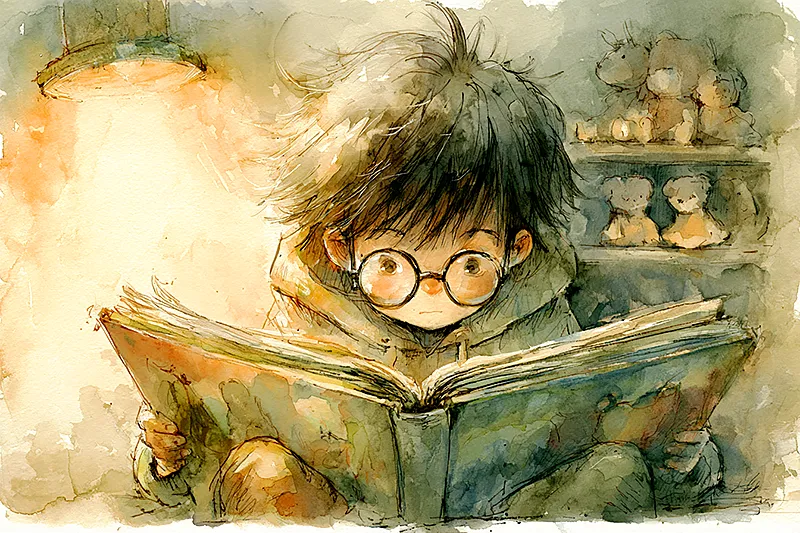
A child around eight years old sitting in a cosy reading corner, looking intently at an illustrated storybook held open in both hands. The child wears small round glasses and a favourite hoodie. The room is calm and well-ordered with soft lighting — a lamp, no harsh overhead lights. A few carefully arranged plush toys on a shelf behind them. The book is large and colourful. The child is completely absorbed. Watercolor illustration style in sage, amber, and soft cream tones. The quality of the light and the child's posture conveys deep focus rather than tension.

Personalized Books for Children on the Autism Spectrum: What Actually Helps

Many autistic children find it difficult to connect with books about other people. That difficulty, and how personalization addresses it, has a clear explanation.

Read Article: Personalized Books for Children on the Autism Spectrum: What Actually Helps
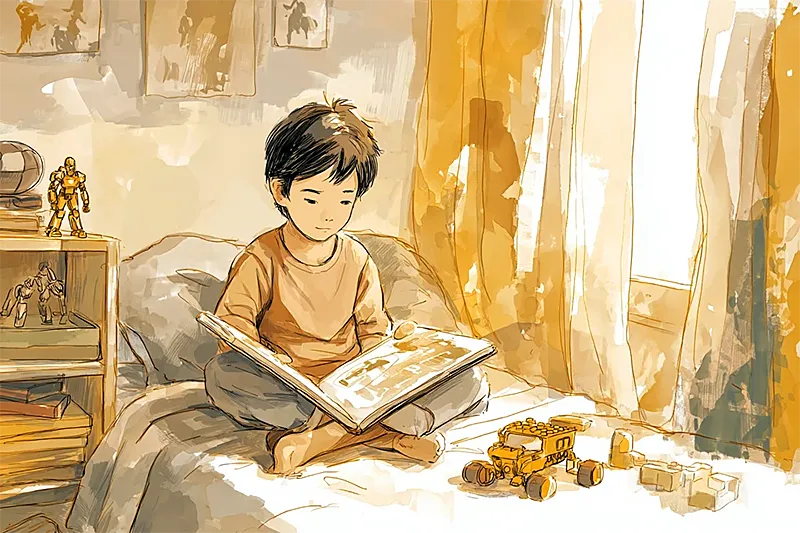
A child around seven years old, sitting cross-legged on a bed with an illustrated storybook open in their lap, completely absorbed. The room shows the texture of an energetic child's life — a half-built Lego set, some action figures on a shelf, a football by the door. But the child is still. Their eyes are moving across the page. Warm late-afternoon light through curtains. Watercolor illustration style in amber, sage, and cream. The stillness is the point of the image.

Why Personalized Books Work Especially Well for Children With ADHD

The research on ADHD and reading engagement points to something specific about how these children respond to stories that are about them.

Read Article: Why Personalized Books Work Especially Well for Children With ADHD
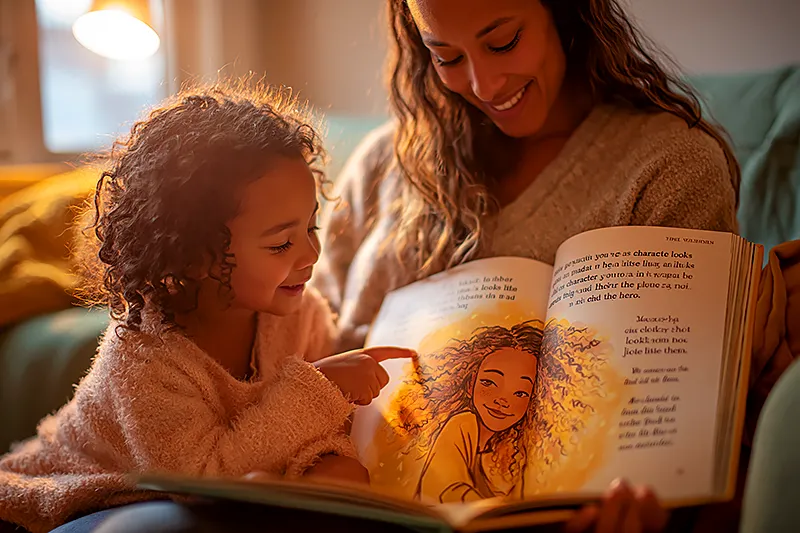
A four-year-old child sitting on a parent's lap, both of them looking at an open picture book together. The child is pointing at an illustrated character on the page with obvious recognition and delight — the character looks just like them. The parent is smiling down at the child's reaction. Warm, cozy home setting — soft light through a window, a comfortable armchair. The scene captures the precise moment of a child recognizing themselves as the hero.

Personalized Books for 4-Year-Olds: The Age When Stories Become Identity

Four is the year children discover they can be the hero of the story — not just a listener, but the protagonist. A personalized book at this age doesn't just entertain. It builds the narrative through which they understand who they are.

Read Article: Personalized Books for 4-Year-Olds: The Age When Stories Become Identity
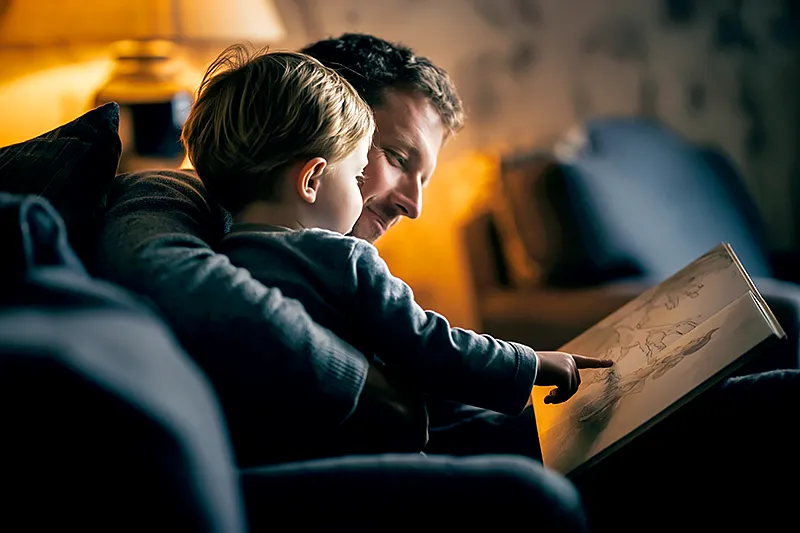
A father sitting in a large armchair in the early evening, a young child tucked against his side, both looking at an open picture book. The child's finger points at an illustrated character on the page. Warm lamp light. A relaxed, unhurried feeling — neither looking at anything except the book. Muted navy and amber tones. No faces fully visible. The focus is on their shared attention, the small hand reaching up to point, the father's arm around the child's shoulder.

The Father's Day Gift That Isn't for Him Either

He'll say he doesn't need anything. He might even mean it. But the thing he actually wants — a ritual, a reason to be still with his child — fits in a book.

Read Article: The Father's Day Gift That Isn't for Him Either
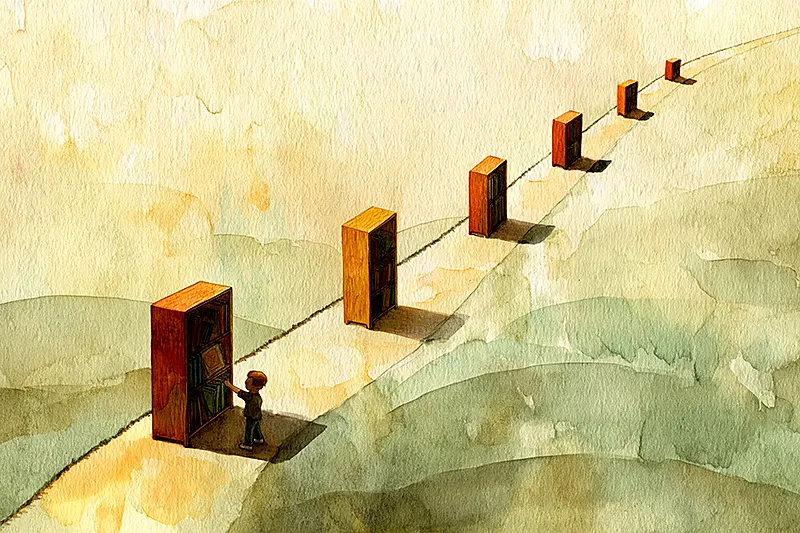
Watercolor illustration of a winding path through gentle rolling hills, with six small wooden bookshelves placed along the path at intervals, each holding different sized books that grow progressively larger. A tiny child at the start of the path reaches for a chunky board book, while the path leads into the distance past picture books, early readers, and chapter books. Soft morning light, sage green and warm cream palette, organic watercolor bleeds, whimsical but grounded, top-down slightly tilted perspective.

The Right Book at the Right Time

A child's brain is ready for stories before their hands can hold one. Here is what to put in those hands, and when.

Read Article: The Right Book at the Right Time
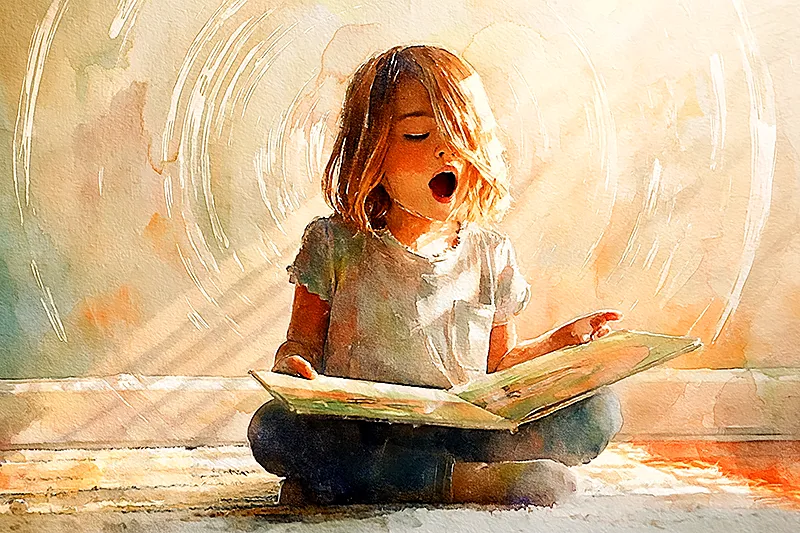
A small child sitting cross-legged on a rug, mouth open mid-chant, holding a picture book loosely in their lap. Around them, faint visible sound waves ripple outward like rings in water, suggesting rhythm and vibration. Warm afternoon light, soft watercolor palette, the feeling of language as a physical force moving through a small body.

Before the Words, the Rhythm

Children absorb poetry before they understand it. The rhythm trains the ear, builds memory, and regulates the body. The words come later.

Read Article: Before the Words, the Rhythm
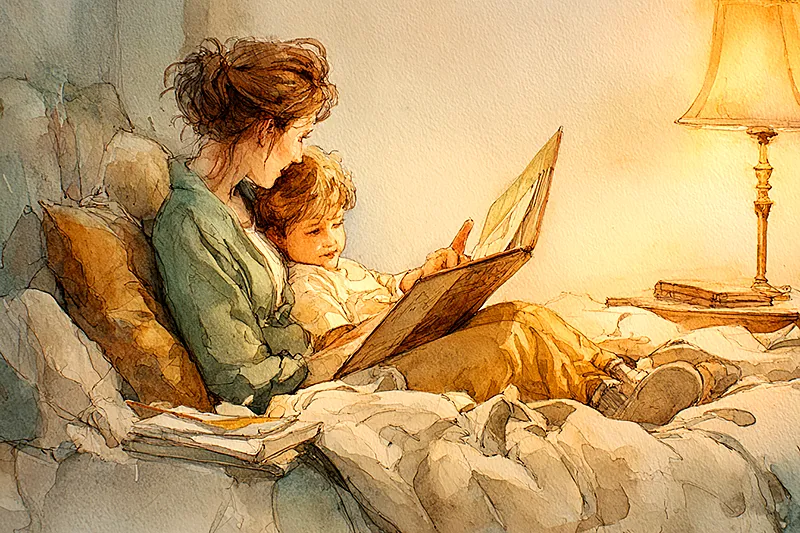
A warm, painterly watercolor scene of a mother sitting on a bed with a young child curled in her lap. The child holds an open picture book, pointing at an illustration. Soft golden lamp light, rumpled blankets, a feeling of quiet intimacy and closeness. Muted sage and cream tones with touches of blush. No text. No faces fully visible. The focus is on the gesture between them: the small hand pointing, the mother's head tilted close.

The Mother's Day Gift That Isn't for Her

The most meaningful thing you can give a mother isn't wrapped in tissue paper. It's a story read aloud in a small voice, on her lap, before bed.

Read Article: The Mother's Day Gift That Isn't for Her
A child's small hands holding open a storybook. On the visible page, a warm illustration of a character who looks just like the child holding the book. The real hands frame the illustrated version of themselves. Close-cropped, intimate, warm amber lighting, the book IS the mirror. Painterly, soft tones, gentle focus on the moment of recognition.

The Book That Knows Their Name

Personalized books sound lovely. But is there science behind it? Three decades of research say the answer changes everything.

Read Article: The Book That Knows Their Name
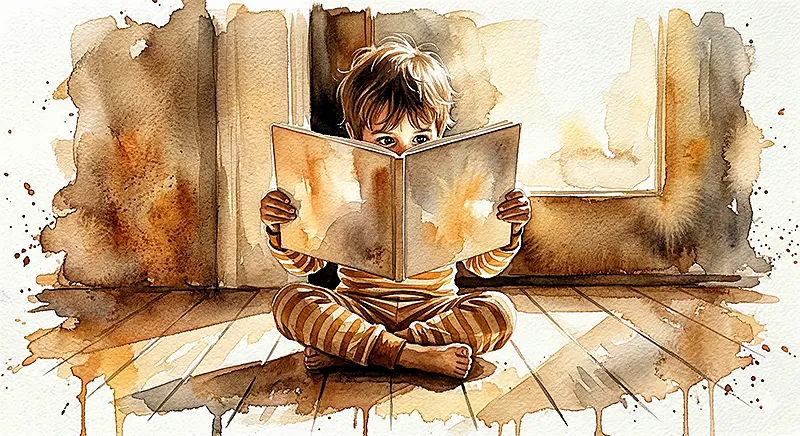
A four-year-old child sitting cross-legged on a sunlit wooden floor, holding a large open picture book up close to their face, completely absorbed. We see the book from behind, slightly translucent from the light, and the child's wide eyes peering over the top edge. Warm morning light, wooden textures, the child is in pajamas. Painterly, intimate, the feeling of total absorption. Amber and cream palette.

What Four-Year-Olds Actually Need from Books

Not more words. Not faster reading. What a four-year-old needs from a book is to see the world bend around their questions.

Read Article: What Four-Year-Olds Actually Need from Books
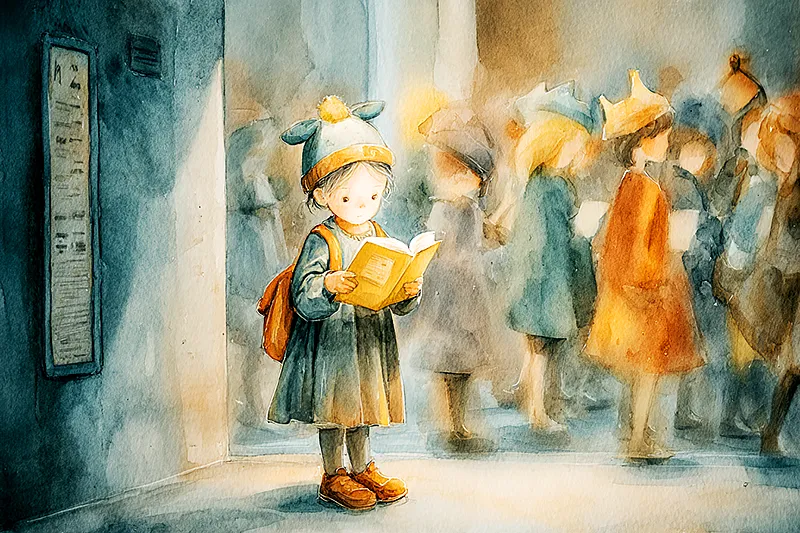
A small child dressed in a simple book-character costume, standing alone in a school hallway holding a single open book. Other children in costumes blur past in motion. The child is still, absorbed in reading, a quiet center in the celebration chaos. Watercolor style, warm school-day light, gentle and observant.

World Book Day and What It's Trying to Tell Us

If reading needs a designated day, something has gone wrong. But the day exists because something is worth protecting.

Read Article: World Book Day and What It's Trying to Tell Us
An extreme close-up of a baby's ear, soft and warmly lit in amber light, with a blurred parent's hand holding an open book in the background. The ear is the focal point. Intimate, macro-lens feel, warm amber and cream palette. The mood is stillness with hidden activity. Painterly, soft, luminous.

Their Brain Is Listening Before Their Eyes Can Focus

Reading doesn't start when a child understands words. It starts when the brain starts listening. And the brain starts listening before birth.

Read Article: Their Brain Is Listening Before Their Eyes Can Focus
A toddler and a parent on a soft couch, the child's head resting against the adult's arm. An open illustrated book between them. The child is pointing at something on the page, eyes wide with recognition. Warm, intimate lighting. The mood is private. Two people in a small world made of a single book. Painterly, warm amber tones, soft focus on the edges.

What Happens Inside a Toddler's Brain When You Read to Them

It's not just bonding. It's architecture. The science of what shared reading builds inside a developing mind.

Read Article: What Happens Inside a Toddler's Brain When You Read to Them
A single tall red-and-white striped hat resting on top of a stack of colorful, well-worn children's books on a wooden table. Warm morning light streams from the left, casting long shadows. In the background, a child's hand reaches for the hat. Painterly watercolor style, nostalgic and warm, soft focus on the background.

What Seuss Knew

He didn't just teach children to read. He taught the world that reading belongs to children.

Read Article: What Seuss Knew
A three-year-old in pajamas sitting cross-legged on a bed, holding a storybook open on their lap. A warm pool of lamplight on the bed. The room is calm and dim around them. A stuffed animal tucked nearby. The child's face is focused on the page, not looking at the camera. The light says bedtime. The posture says safe. Painterly, warm, emotionally soft.

The 3-Year-Old Bedtime Routine That Actually Works

Not a listicle. Not wishful thinking. A research-backed routine for the age when bedtime becomes a negotiation.

Read Article: The 3-Year-Old Bedtime Routine That Actually Works
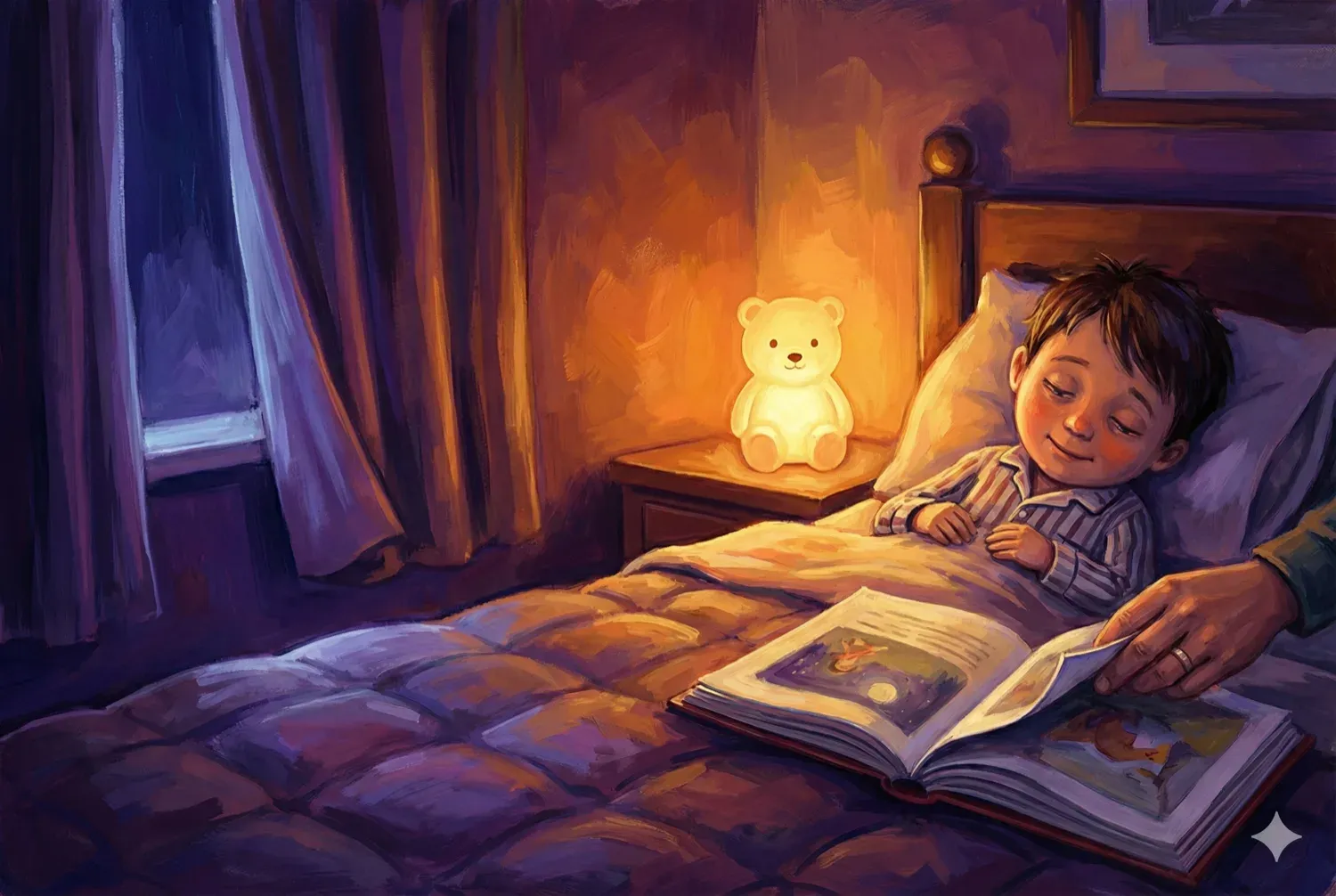
A child in pajamas tucked into bed, a storybook open on the covers, a soft nightlight glowing on the bedside table. The child's eyes are getting heavy, a small smile on their face. A parent's hand visible at the edge of the frame, turning a page. Deep blue evening light through curtains mixed with warm lamplight. Peaceful, drowsy, safe.

The Bedtime Ritual

Bedtime reading isn't just about books. It's about building a place where a child feels safe to end their day.

Read Article: The Bedtime Ritual
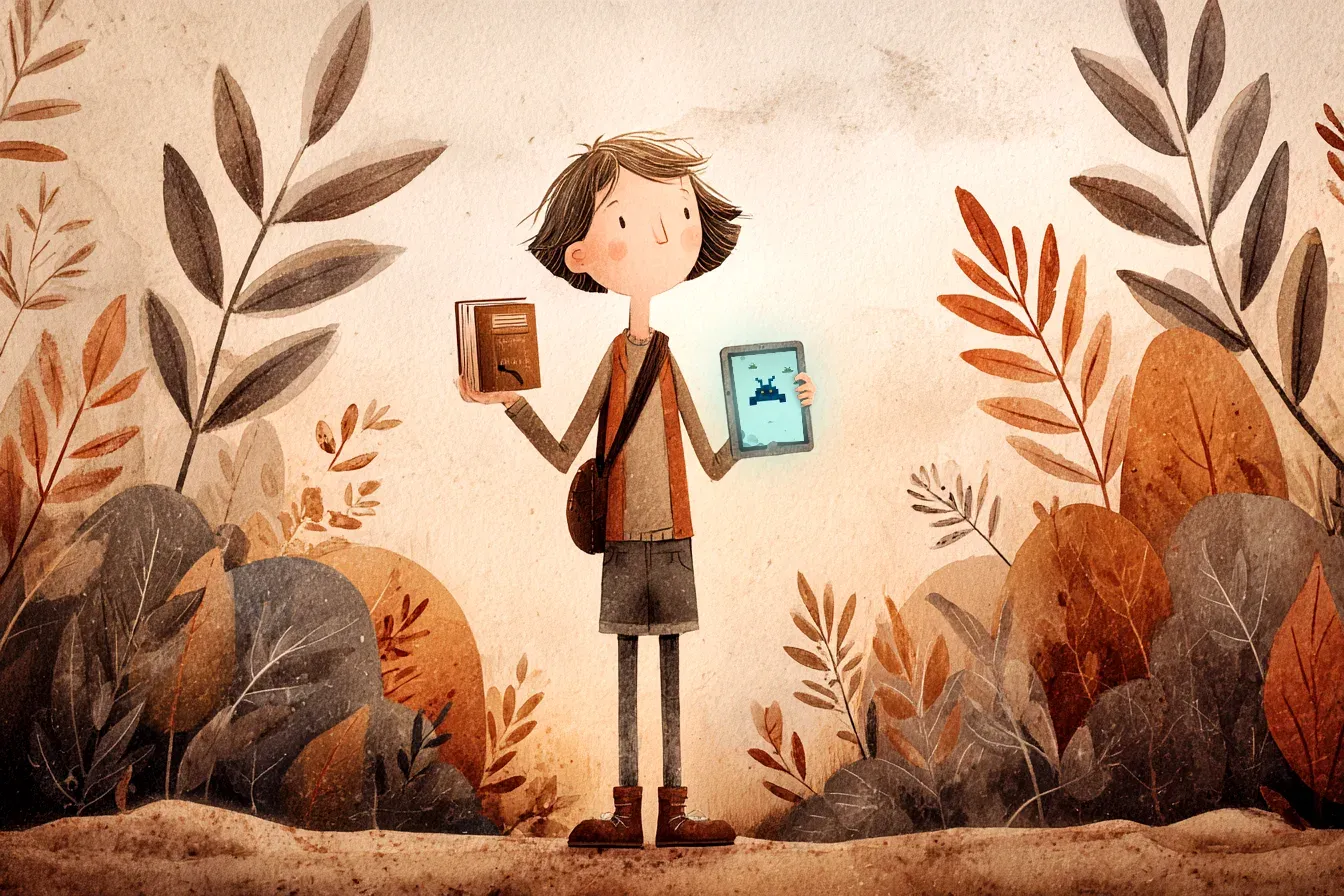
A child standing among autumn foliage, holding a physical book in one hand and a glowing tablet in the other, looking toward the book. Warm earth-tone watercolor palette with muted browns, oranges, and grays. Storybook illustration style, textured paper feel. The child appears contemplative, not conflicted — choosing, not torn.

Are Kids Reading Enough? The Numbers, the Truth, and What Comes Next

Literacy is in crisis. But the solution isn't complicated — it's putting stories in children's hands, whatever form they take.

Read Article: Are Kids Reading Enough? The Numbers, the Truth, and What Comes Next
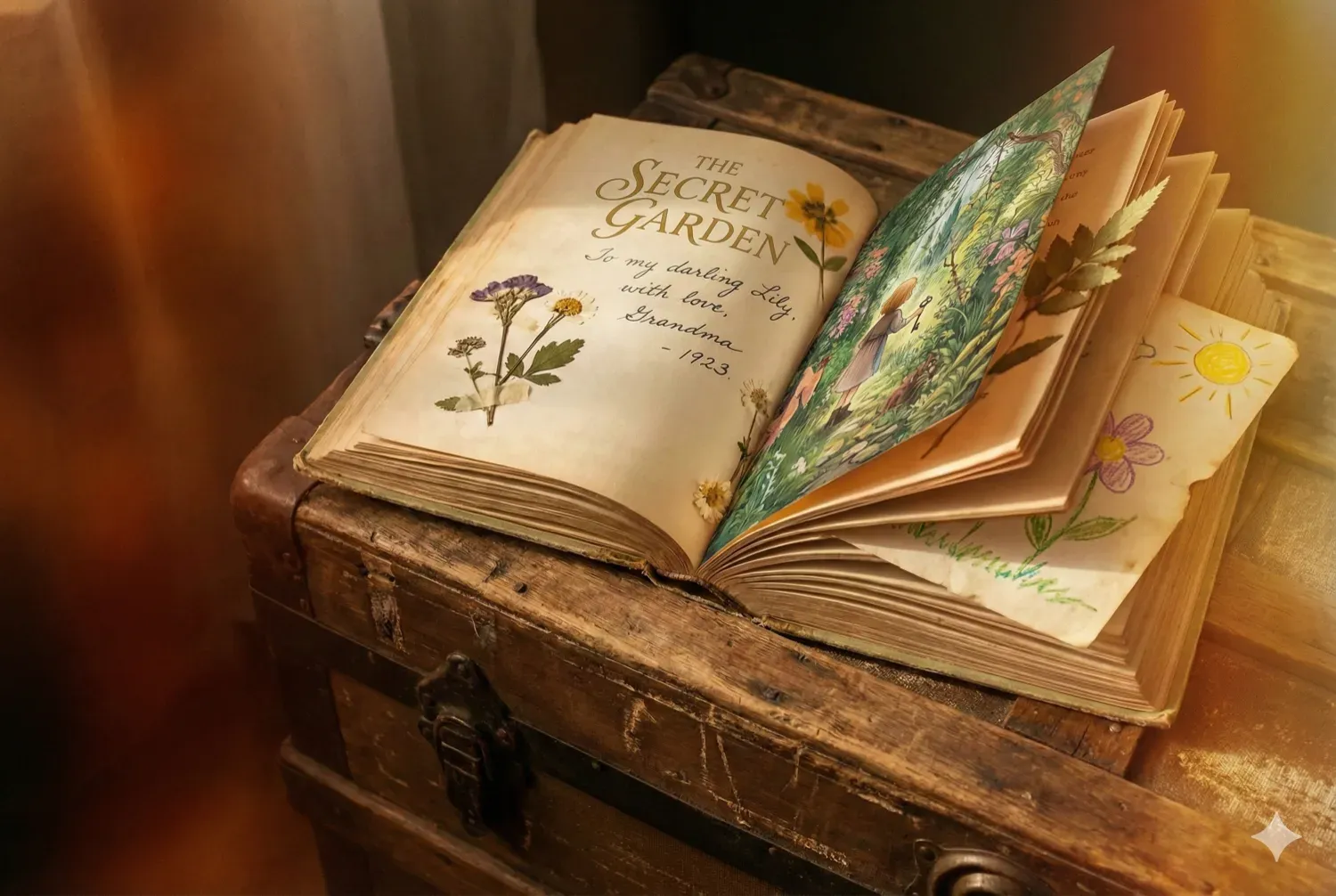
A worn, well-loved children's book lies open on an antique wooden trunk, its pages soft with age. Pressed flowers mark favorite passages. Afternoon light falls across handwritten inscription visible on the first page. A child's drawing tucked between pages. Nostalgic, tender atmosphere. Soft focus, warm sepia-touched palette.

The Book They Remember

Children forget most of what they're given. But certain books stay forever. Here's what makes the difference.

Read Article: The Book They Remember
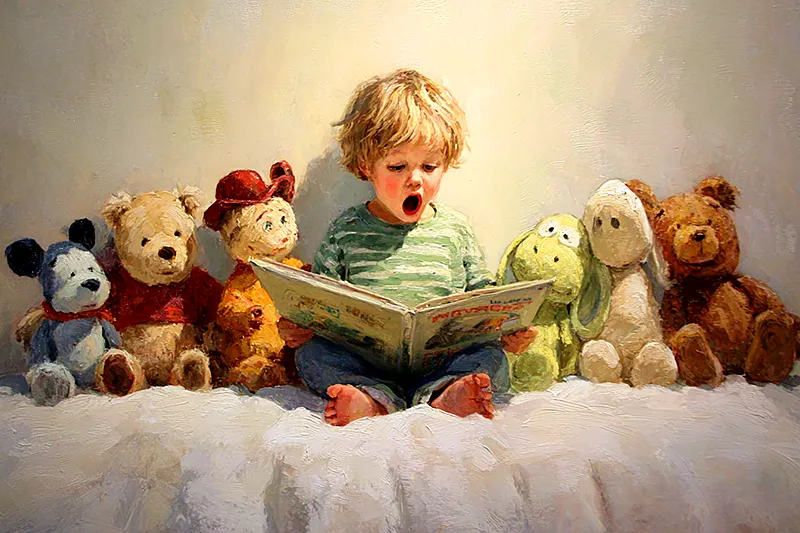
A small child sitting on a rug, holding an open picture book in their lap, mouth open mid-word as if reciting the text from memory. The book faces outward, away from the child, as if they are reading to an audience of stuffed animals arranged in a semicircle. Warm morning light from a window. The child's posture is confident, proud. Painterly, soft golden tones, intimate and quiet.

When Your Child Knows the Book by Heart

They're not memorizing. They're learning to read.

Read Article: When Your Child Knows the Book by Heart
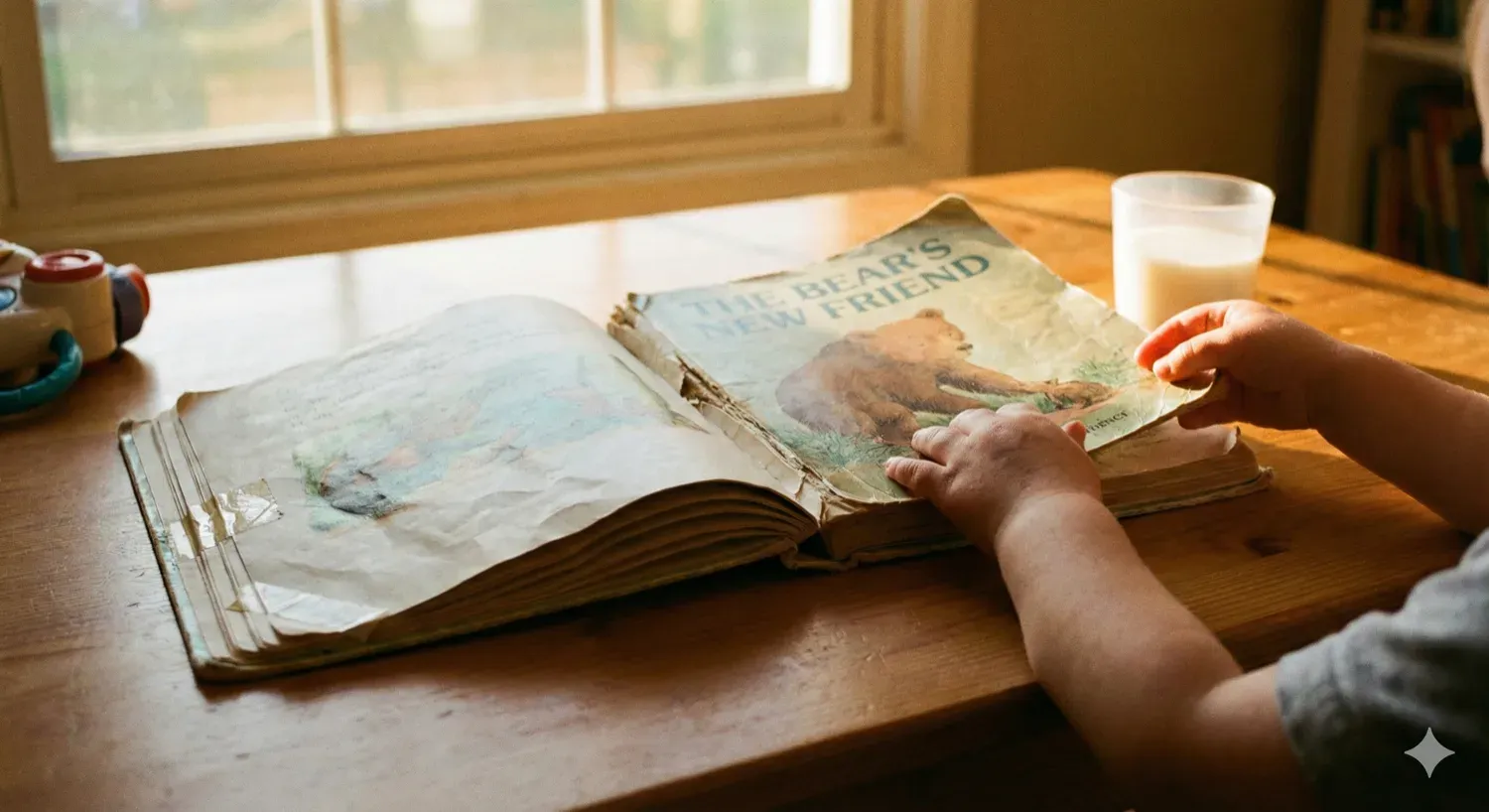
A well-worn children's book lies open, spine cracked and soft, pages slightly wavy from many readings. Small child's hands reach to turn back to the beginning. The book shows signs of love: a small tear taped, corners rounded. Evening light. The beautiful wear of a book that has been read hundreds of times. Nostalgic, warm, cherished.

Why They Want It Again

When a child asks for the same book every night, they're not stuck. They're building something.

Read Article: Why They Want It Again
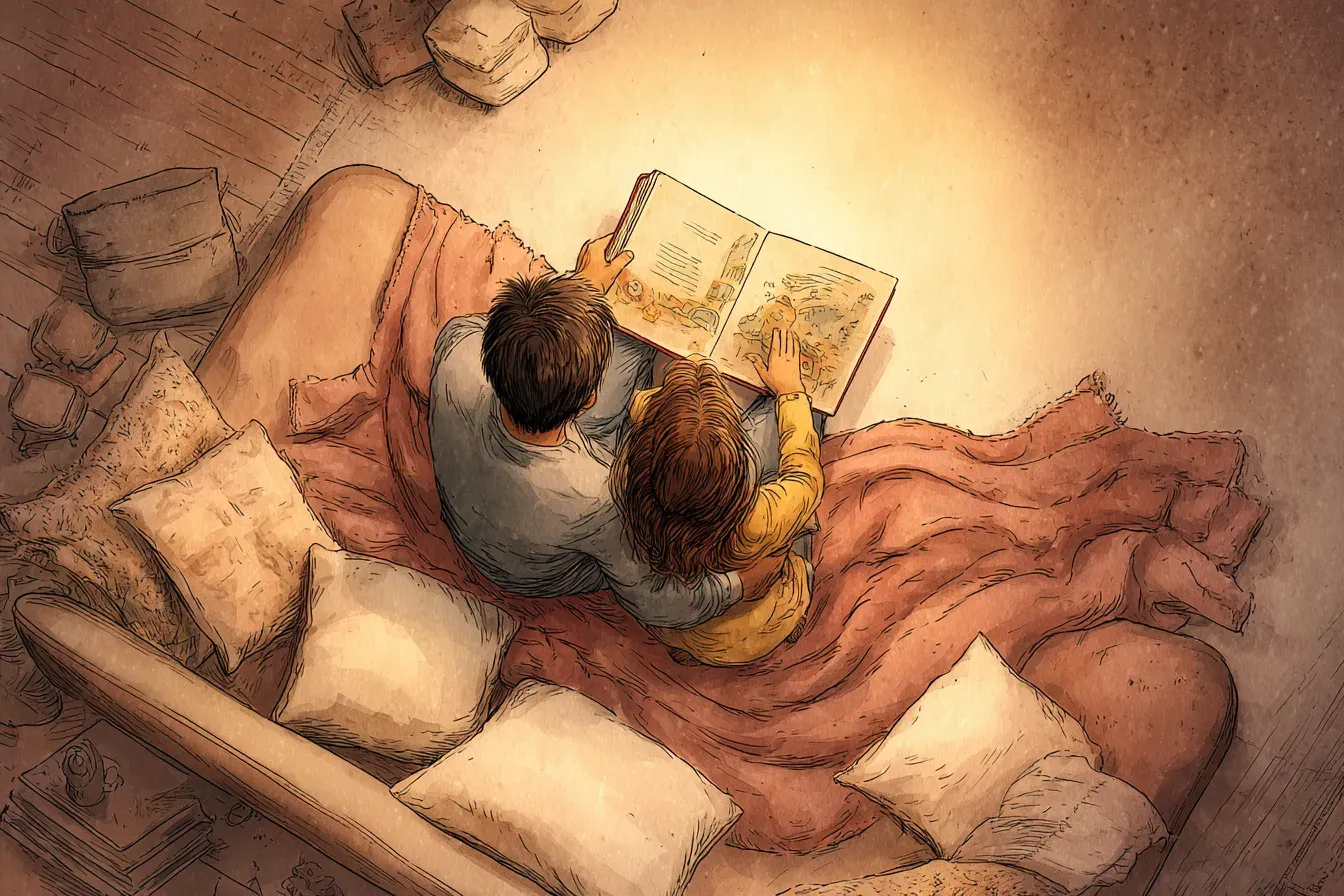
A parent and child on a cozy couch, seen from slightly above. The child points at something in an open illustrated book while the parent leans in to look. Soft lamplight creates an intimate circle around them. Blankets, pillows, warmth. The moment of connection over a page. Soft watercolor style, warm amber and cream tones.

Reading Together, On Purpose

Storytime isn't about getting through the book. It's about what happens in the space between the words.

Read Article: Reading Together, On Purpose