Inclusive Books

4 articles about inclusive books

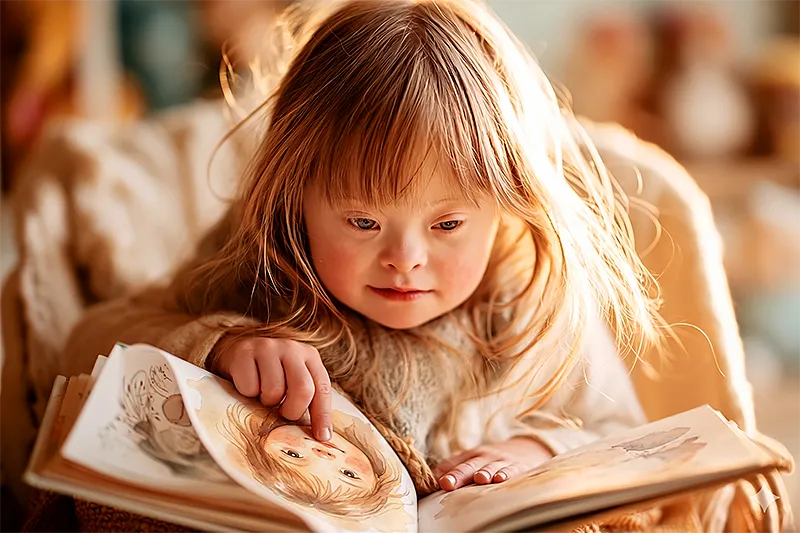
A child with Down syndrome, around five years old, sitting comfortably in a cozy reading chair with a picture book open in their lap. The book's visible pages show an illustrated character who clearly resembles them — same features, same joyful expression. The child is absorbed in the story, one finger tracing the illustration. Warm afternoon light. The room is full of their particular character — toys they like, colors they've chosen, their settled ownership of the space. The atmosphere is one of a child in their own world, entirely themselves.

Personalized Books for Children with Down Syndrome: The Hero Who Looks Like Them

Children with Down syndrome have often spent years in stories where no one looks like them. A personalized book that places them as the hero — with their face in illustration, their qualities driving the plot — isn't representation as a gesture. It's what representation is supposed to do.

Read Article: Personalized Books for Children with Down Syndrome: The Hero Who Looks Like Them
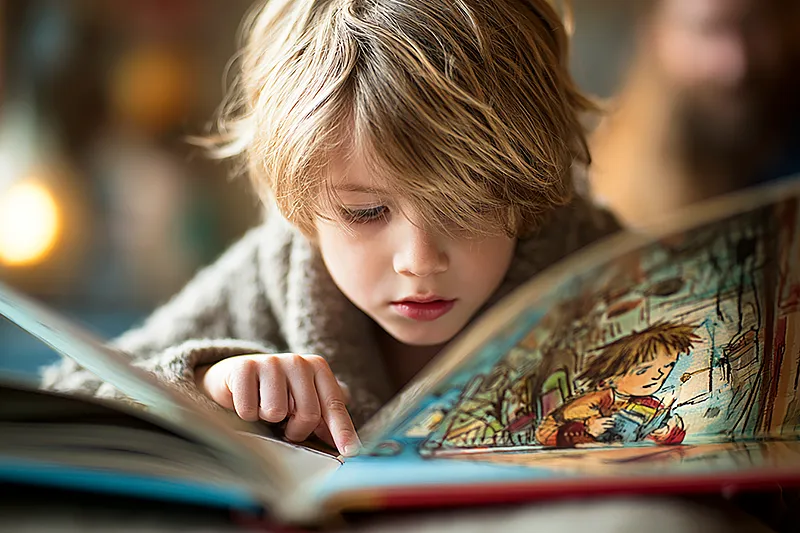
A child of about five or six — watchful, perceptive, present in the way only quiet children can be — sitting in a safe, familiar home space with a picture book open on their lap. The child is completely absorbed, running one finger along the illustrated page, where a character who looks exactly like them is shown in an adventurous scene — clearly bold, clearly the hero, clearly doing something important. The child's expression is one of deep, private satisfaction. A parent is in the background, at some distance, watching with quiet pride. The quality of the scene is: this child is entirely at home in themselves, in this moment.

Personalized Books for Children with Selective Mutism: Quiet Voice, Strong Self

Children with selective mutism have a voice. They know who they are. The silence is situational, not foundational — and a book where they are the protagonist and the hero says exactly that: your voice exists. Your story exists. And here it is.

Read Article: Personalized Books for Children with Selective Mutism: Quiet Voice, Strong Self
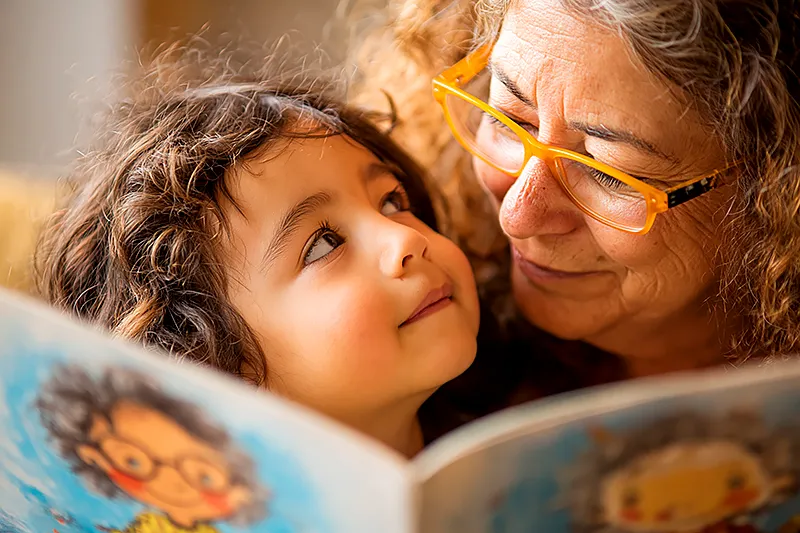
A parent and a young child of about four or five, close together in a warm and comfortable reading space. The child is listening intently, face tilted upward toward the parent's voice, while the parent reads from a picture book whose illustrated pages are visible to us — showing a character who looks exactly like the child. The parent's expression is one of total engagement, reading with care. Natural warm light. The image conveys the intimacy of being read to, the child receiving the story through the parent's voice rather than their own eyes.

Personalized Books for Children with Visual Impairment: An Honest Assessment

Picture books are primarily a visual medium — and there's no honest way to pretend otherwise. But visual impairment exists on a wide spectrum, and what makes a personalized book meaningful for a child who is blind or low-vision deserves a careful, honest answer.

Read Article: Personalized Books for Children with Visual Impairment: An Honest Assessment
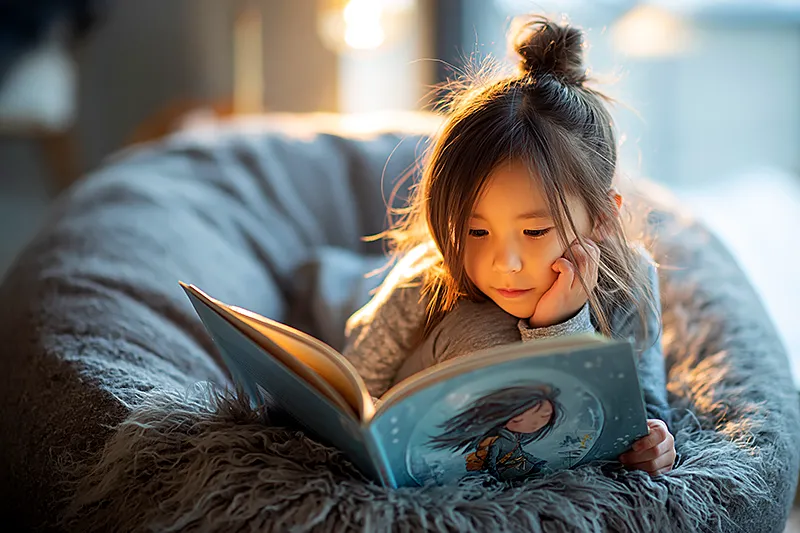
A child of around four to six, settled and absorbed in a comfortable, familiar space — a beanbag, a cozy corner, a specific spot in a bright room that is clearly theirs. They are holding a picture book open, completely focused on the pages, which show a character who looks exactly like them in an adventure scene. Their expression is one of deep, easy engagement — not effortful attention, but the natural absorption of a child in something they love and find completely safe. Warm, clear light. The room is theirs. Everything is calm.

Personalized Books for Children with Sensory Processing Differences: Familiar, Predictable, Theirs

Children with sensory processing differences often develop particularly deep attachments to specific, familiar books — the same story, the same pages, the same words, again and again. A personalized book built around their own face and name takes this further: the familiar character is themselves.

Read Article: Personalized Books for Children with Sensory Processing Differences: Familiar, Predictable, Theirs